
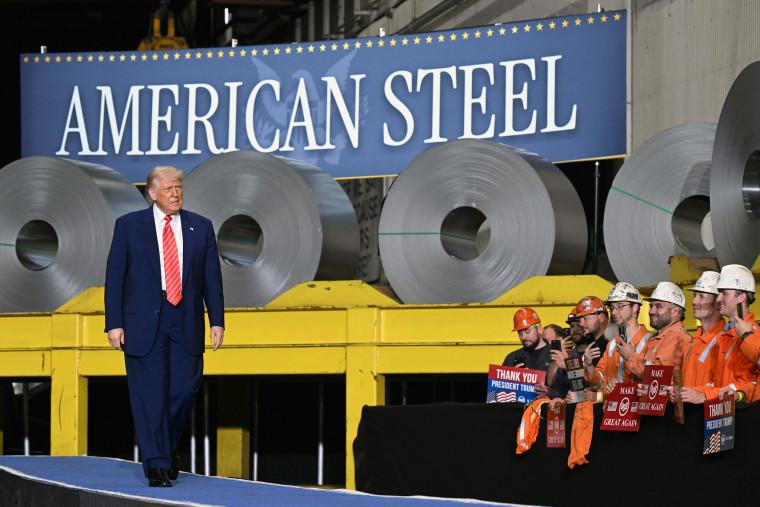
U.S. steel prices climbed again this month, piling new costs onto manufacturers, home builders and other buyers who say the sharp uptick is the predictable fallout of federal tariffs on imported steel. Business groups and purchasing managers are pointing the finger at trade policy, arguing that measures meant to protect domestic mills have instead raised input prices across the economy. The dispute has turned into a political and commercial flashpoint as companies scramble to absorb higher bills and lawmakers confront competing pressures from consumers and the steel industry.
American Steel Price Surge Squeezes Builders and Manufacturers as Tariffs Raise Import Costs
The recent uptick in American steel prices has tightened margins across construction and manufacturing sectors, with many buyers pointing to tariff-driven import costs as the culprit. Suppliers and purchasing managers say the duties meant to shield domestic producers have reduced access to competitively priced foreign coil and plate, forcing contractors and fabricators to absorb higher input costs or pass them on through bids. Industry sources report that the squeeze is most acute for mid-size builders and specialty manufacturers who lack long-term contracts or the scale to hedge price volatility, prompting some to delay projects or re-specify materials to stay under budget. Buyers and trade groups are increasingly vocal that policy protections have translated into near-term price pressure rather than broader industrial revitalization.
- Longer procurement lead times for specific steel grades
- Higher bid prices on public and private construction projects
- Margin compression for small and regional fabricators
- Pressure to substitute alternative materials with different performance profiles
| Product | Reported Price Change |
|---|---|
| Hot-rolled coil | +12% (quarterly) |
| Cold-rolled sheet | +9% (quarterly) |
| Structural beams | +7% (quarterly) |
As the debate shifts from supply-side protection to immediate cost impacts, industry advocates are pressing lawmakers for targeted relief measures such as temporary waivers, streamlined exemptions, or calibrated reductions to tariffs on inputs not produced domestically at scale. Economists warn that without responsive policy adjustments, the steel price shock could ripple into higher consumer prices for appliances and vehicles and slow construction starts this season; at the same time, domestic mills argue that predictable tariffs are needed to sustain investment. The standoff sets up a classic policy trade-off: short-term relief for buyers versus long-term support for domestic capacity, a policy crossroads that stakeholders say requires faster, data-driven action.
Buyers Say Tariffs Are Primary Driver and Call for Urgent Policy Review in Washington
Buyers from construction firms to heavy machinery manufacturers told reporters that rising bids reflect a single common cause: tariffs on imported steel, which they say have siphoned competition out of the market and allowed domestic mills to raise prices with little pushback. Procurement directors described multi-million-dollar contracts rewritten mid-negotiation and smaller contractors forced to postpone projects. The consequences, they said, are immediate and measurable:
- higher bid prices on government and private contracts
- longer lead times as suppliers consolidate
- reduced purchasing power for small- and mid-sized buyers
Industry groups and buying coalitions are pressing lawmakers and regulators in Washington for an expedited review and possible relief, arguing that a narrow set of policy adjustments could stabilize markets without undercutting domestic producers. Proposals being circulated include temporary tariff waivers, a targeted review of quota allocations and expedited hearings at the Commerce Department. Below is a summary of the most commonly requested actions and the effects buyers expect:
| Requested Action | Expected Effect |
|---|---|
| Temporary tariff waivers | Immediate price relief |
| Quota reallocation | Improved supply diversity |
| Fast-track hearings | Quicker policy response |
Buyers insist the window for meaningful change is small and described the situation as requiring an urgent policy review in Washington to prevent further market fragmentation.
Industry Advises Locking in Longer Term Contracts Diversifying Suppliers and Hedging Raw Material Prices
Faced with a near-term surge in domestic steel prices, trade groups and procurement executives urged buyers to take defensive steps this week to stabilize supply and budgets. Their guidance emphasized three measures: securing multi-year contracts to guarantee capacity, broadening supplier networks to reduce single-source exposure, and employing financial hedges to manage input-cost volatility. Industry spokespeople pointed to rising tariffs and compressed mill throughput as the drivers behind sudden upward moves on spot markets, saying that a mix of contractual certainty and portfolio diversification is the fastest way to insulate projects from repeated price shocks.
- Lock in baseline volumes with price collars or fixed spreads
- Qualify secondary and regional mills to shorten lead times
- Use futures/options or indexed swaps to cap upside risk
Procurement teams are already piloting combinations of those tactics, balancing cost certainty against flexibility. Below is a snapshot of common approaches buyers are testing, with trade-offs companies cite when weighing long-term commitments against market exposure.
| Strategy | Typical Term | Primary Trade-off |
|---|---|---|
| Multi-year contract | 12-36 months | Price certainty vs. potential missed savings |
| Supplier diversification | Ongoing | Logistics complexity vs. resilience |
| Hedging (futures/options) | 3-18 months | Hedge cost vs. protection from spikes |
Analysts caution that no single tactic eliminates risk; companies that combine contractual terms with active market hedging report the strongest protection against tariff-driven swings.
Lawmakers Weigh Targeted Duty Adjustments Increased Oversight and Relief for High Use Sectors
Congressional sources and industry witnesses told reporters that negotiators are considering a narrow set of adjustments to current tariffs after weeks of buyer complaints that American steel has become markedly more expensive. Lawmakers signaled they are focusing on targeted remedies – not wholesale repeal – and want the Commerce Department and the U.S. Trade Representative’s office to tighten oversight of exemptions and anti‑circumvention enforcement. Corporate purchasers, state procurement officials and trade groups are urging expedited reviews and temporary waivers for critical supply chains, arguing that swift action is needed to avoid project delays and cascading price increases for consumers.
- Temporary exemptions for high‑use manufacturers
- Fast‑track reviews of tariff classifications and duties
- Enhanced monitoring to prevent evasion and diversion
| Sector | Steel Use | Proposed Relief |
|---|---|---|
| Construction | High | Temporary tariff exemptions |
| Automotive | Moderate | Fast-track duty reviews |
| Energy & Infrastructure | Critical | Targeted relief + oversight |
Republican and Democratic aides described a pragmatic approach: carve out relief where domestic shortages and downstream harms are clearest while preserving the broader guardrails intended to protect U.S. steelmakers. Industry lobbyists warned that any carve‑outs must be tightly scoped and time‑limited; trade economists cautioned that poorly designed exemptions could invite circumvention. Lawmakers plan hearings in the coming weeks and signaled that any legislative fix would likely combine short‑term administrative actions with longer‑term statutory changes to balance domestic production support and buyer affordability.
Insights and Conclusions
The price jump has put a spotlight on the trade-offs of using tariffs to protect domestic industry: policymakers say they shore up U.S. producers, while buyers warn they raise costs for manufacturers and consumers. In the coming weeks, companies are likely to press for exemptions, seek alternate suppliers or pass higher costs along the chain, and lawmakers and industry groups may ratchet up pressure on the administration to revisit policy. How Washington responds – and how quickly markets and manufacturers adjust – will help determine whether the move strengthens American steelmakers or adds to broader inflationary pressures. For now, the dispute over tariffs and their economic consequences is set to be a defining issue for U.S. manufacturing and trade policy.