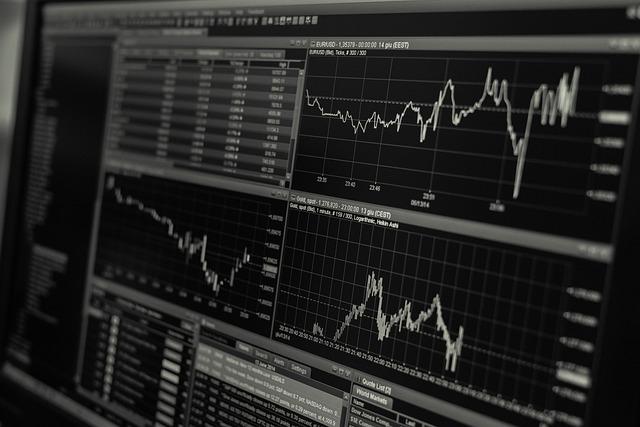
U.S. stock futures were steady on Monday after a sharp sell-off in technology shares dented major indexes, as investors shifted their focus to escalating tensions in the Middle East that could heighten market volatility. Traders watched developments in the region for signals on safe-haven flows and risk appetite, while assessing whether the tech-driven weakness presages broader market pressure. The cautious mood persisted heading into the trading day as participants weighed geopolitical risks alongside upcoming economic and corporate news.
US stock futures steady after tech slump as investors reassess risk exposure and growth valuations
After a sharp pullback in high‑growth technology names, U.S. equity futures drifted without a clear directional bias as market participants reassess risk exposure and the premium attached to long‑duration growth stocks. Traders cited rising bond yields, profit‑taking in mega‑caps and renewed geopolitical concern in the Middle East as competing forces shaping early activity. Key themes driving flows included:
- revaluation of richly priced tech earnings
- safe‑haven demand linked to regional tensions
- energy price sensitivity and its inflation implications
Futures showed modest moves while strategists awaited fresh data and corporate updates that could tilt sentiment; short‑term positioning favored selective hedges over broad directional bets. Market snapshots at the open suggested consolidation rather than a capitulation, with participants monitoring oil, Treasury yields and headlines from the Middle East for the next catalyst.
| Index | Futures | Change |
|---|---|---|
| S&P 500 | 4,300 | +0.1% |
| Nasdaq 100 | 13,200 | -0.2% |
| Dow | 34,100 | +0.0% |
Middle East tensions lift oil and safe haven demand, prompting rotation into energy and defense stocks
Escalating geopolitical friction in the Middle East pushed oil prices higher and bolstered demand for traditional safe havens, prompting a fresh rotation out of beaten-down technology names and into energy and defense equities. U.S. futures held near unchanged levels after a steep slide in megacap tech, as traders weighed supply concerns and the prospect of elevated military spending. Market participants cited a shift toward assets perceived as defensive and inflation-protective, with flows increasingly favoring producers and contractors over growth-oriented stocks.
- Energy: increased allocations to integrated producers and refiners
- Defense: renewed interest in prime contractors and suppliers
- Fixed income & gold: safe-haven bids for short-term treasuries and bullion
Analysts warned the rotation could be volatile, noting that any de-escalation would likely reverse short-term gains for cyclical names, while a protracted conflict could sustain elevated commodity prices and defense budgets. Companies positioned to benefit include large-cap oil explorers and established defense primes, though earnings sensitivity varies across the complex.
| Sector | Near-term outlook |
|---|---|
| Oil & Gas | Price-driven boost, capex watch |
| Defense | Order visibility improves, contract timing key |
| Precious Metals | Flight-to-quality support |
Market strategists recommend trimming concentrated tech positions, increasing cash and adding selective cyclical names ahead of earnings and Fed commentary
Facing a recent pullback in megacap shares and heightened geopolitical risk, strategists urged investors to pare back oversized technology bets and bolster liquidity ahead of a busy week of corporate results and central bank comments. They warned that stretched valuations and concentrated positioning could amplify downside if earnings disappoint or if hawkish signals emerge from policymakers. Top recommendations included a measured increase in cash buffers, tactical trimming of the largest winners and shifting marginal capital into industrials and other cyclical areas that stand to benefit from a reacceleration in activity. Risk management, not market timing, was emphasized as the principal objective.
Portfolio guidance from several desks converged on a few practical steps, summarized below and in the snapshot table, as investors weigh macro headlines – including tensions in the Middle East – alongside corporate outlooks.
- Trim: highly concentrated tech exposures to reduce idiosyncratic risk
- Raise: short-term cash to seize opportunities post-Fed commentary
- Add: selective cyclicals such as industrials, materials and energy-related names
| Action | Typical Rebalancing |
|---|---|
| Tech trims | Reduce 5-12% |
| Cash target | 10-15% of portfolio |
| Cyclicals added | Increase 3-8% |
Analysts noted that specific sector picks should be driven by earnings momentum and balance-sheet strength, and they flagged that any escalation in regional hostilities could prompt a faster rotation toward defensive assets. Active monitoring of earnings beats and Fed signals remains the watchword for the week.
Practical investor actions monitor crude shipments and geopolitical developments, boost Treasury holdings and use options to hedge downside risk
Traders and portfolio managers are intensifying real‑time surveillance of crude shipments and geopolitical flashpoints as energy flows become a near‑term determinant of market sentiment. Satellite tracking of tanker routes, port call data and insurance premium movements for Middle East voyages are being cross‑checked with news feeds for any sign of disruption; even modest outages are now quickly priced as an oil‑price risk premium that can reverberate through cyclicals and energy stocks. Market participants say the combination of thin liquidity and heightened headlines means positioning is more fragile, prompting faster shifts between risk‑on and risk‑off stances.
Against that backdrop, investors are reallocating into government debt and leaning on derivatives to cap losses: demand for short‑duration Treasuries has risen as a hedge while non‑commercial option flow shows an uptick in protection buys. Typical tactical measures reported by traders include increasing Treasury holdings, layering in index and single‑stock puts, and implementing collars to reduce downside while retaining upside potential. Common approaches in current market conditions include:
- Index puts – broad downside protection with fast execution
- Protective collars – limit losses while funding some of the cost via calls
- VIX calls – asymmetric hedge for volatility spikes tied to geopolitical shocks
| Instrument | Typical use | Relative cost |
|---|---|---|
| 2‑yr Treasury | Near‑term safety and liquidity | Low |
| S&P 500 puts | Direct equity downside protection | Moderate |
| Collar (puts + calls) | Limit losses, preserve upside | Low-Moderate |
To Conclude
In short, markets moved into the U.S. open cautious but calm, with futures steady after losses in technology stocks and investors keeping a close eye on tensions in the Middle East. Any escalation there – and the potential impact on oil supplies – could quickly reshape risk appetite, pushing flows into safe-haven assets and renewing volatility in equities. In the near term, traders will be watching economic data and Federal Reserve commentary for clues on the policy outlook, while earnings headlines and developments in the region will likely determine whether the tentative stability holds.