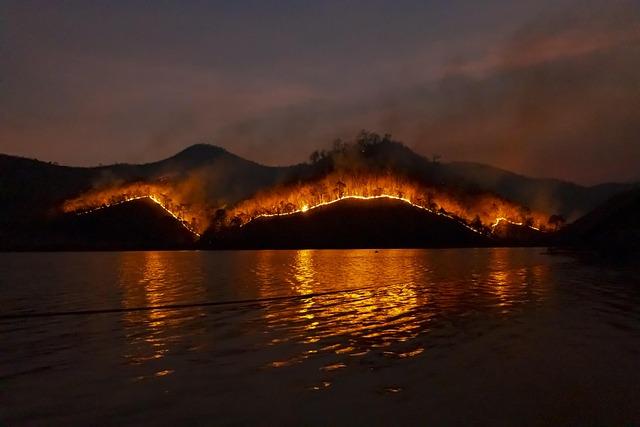
Thick smoke from large wildfires in Canada swept across the U.S. Midwest and Northeast this week, prompting widespread air-quality alerts and public-health warnings as officials said particulate levels reached hazardous readings. The haze reduced visibility, shrouded city skylines and led communities to curtail outdoor activities, with authorities urging vulnerable residents to stay indoors. Meteorologists attributed the deterioration in air to prevailing winds carrying smoke hundreds of miles south from the blazes.
Canadian wildfire smoke blankets US Midwest and Northeast triggering hazardous air quality alerts
Thick plumes drifting south from persistent fires in western Canada turned skies orange and reduced visibility across large swaths of the U.S. Midwest and Northeast, prompting health departments to issue hazardous air quality advisories in several states. Satellite imagery and ground monitors registered sharp spikes in particulate matter (PM2.5), with readings in some urban areas briefly reaching very unhealthy to hazardous levels, forcing schools to cancel outdoor activities and some transit agencies to warn of reduced service due to poor visibility and respiratory concerns.
Public health officials urged immediate precautions as conditions fluctuated rapidly:
- Stay indoors: limit strenuous activity and keep windows closed.
- Use filtration: run HEPA filters or central air on recirculate if available.
- Protect the vulnerable: seniors, children and those with lung disease should seek cleaner air spaces.
| City | Recent AQI | Category |
|---|---|---|
| Chicago | 185 | Unhealthy |
| Detroit | 210 | Very Unhealthy |
| Boston | 170 | Unhealthy |
Health officials warn of soaring fine particulate levels and advise vulnerable people to stay indoors use tight fitting particulate respirators and limit exertion
Public health authorities warned that fine particulate matter (PM2.5) from Canadian wildfires has pushed air quality into the hazardous range across large portions of the Midwest and Northeast, prompting immediate precautions for the most vulnerable. Officials urged people with respiratory or cardiovascular conditions, older adults, pregnant people and young children to remain indoors, avoid physical exertion and monitor local advisories. Recommended steps include:
- Stay inside with windows and doors closed whenever possible.
- Use a tight‑fitting particulate respirator (N95, KN95, or equivalent) if you must go outside.
- Limit strenuous activity – keep workouts and outdoor chores to a minimum until air clears.
- Run portable HEPA air purifiers and avoid indoor sources of smoke (candles, frying).
Health departments emphasized correct mask fit and practical household precautions, noting that surgical or cloth masks do not reliably block PM2.5. Employers, schools and care facilities were advised to reduce outdoor time and consider remote options where feasible. Seek medical care if you experience worsening shortness of breath, chest pain, fainting, or severe coughing. For quick reference, air quality bands commonly used by agencies are summarized below:
| AQI Category | PM2.5 (µg/m³) |
|---|---|
| Good | 0-12 |
| Moderate | 12.1-35.4 |
| Unhealthy for Sensitive Groups | 35.5-55.4 |
| Unhealthy to Hazardous | 55.5+ |
Schools and employers shift activities as visibility and air quality decline with guidance to close windows run certified air cleaners and postpone outdoor events
Schools and employers across the Midwest and Northeast reported rapid operational shifts as thick smoke from Canadian wildfires drove air quality indexes into hazardous levels. Districts moved to indoor activities, delayed or canceled field trips and athletic events, and some shifted to remote learning or staggered work schedules after public health officials and air quality monitors warned of prolonged poor visibility and particulate matter spikes. Local emergency managers urged vigilance: administrators closed windows, sealed ventilation where possible and prioritized spaces with mechanical filtration as staff scrambled to protect vulnerable students and employees.
Recommended immediate actions for institutions were circulated by health departments and included the following measures to reduce exposure:
- Keep children and staff indoors; suspend outdoor athletics and assemblies.
- Run certified HEPA air cleaners in classrooms, gyms and office areas.
- Limit physical exertion and shorten time in common spaces without filtration.
| Action | Target | Note |
|---|---|---|
| Close windows / doors | All facilities | Reduce smoke ingress |
| Deploy portable HEPA units | Classrooms, offices | Prioritize high-occupancy rooms |
| Postpone outdoor events | Sports, field trips | Reassess as AQI improves |
Forecasts show smoke plume moving eastward with authorities urging residents to monitor local air quality updates seal homes and protect children seniors and those with respiratory conditions
Satellite imagery and atmospheric models show the smoke shifting eastward across the region, prompting public-health officials to advise vigilance as air quality worsens in urban and rural communities alike. Health advice:
- Monitor local air quality indexes and official alerts frequently.
- Keep windows and doors closed; seal gaps with towels or weatherstripping where possible.
- Limit outdoor activities, especially for children, older adults and people with asthma or other respiratory illnesses.
- When outdoors is unavoidable, use properly fitted N95 or equivalent respirators rather than cloth masks.
Forecast and precautions: Models project peak haze and elevated particulate concentrations overnight into the next 48 hours across parts of the Midwest and Northeast, with pockets of hazardous readings expected in downwind corridors; officials warned schools and event organizers to prepare for cancellations or modifications. Below is a quick reference for expected air-quality levels and recommended responses:
| AQI | Level | Recommended action |
|---|---|---|
| 0-50 | Good | Normal outdoor activity |
| 51-100 | Moderate | Sensitive groups be cautious |
| 101-150 | Unhealthy (Sensitive) | Limit prolonged exertion |
| 151-200 | Unhealthy | Stay indoors; use air filters |
| 201+ | Very Unhealthy-Hazardous | Avoid outdoor exposure; seek clean-air shelters |
In Summary
Officials urged residents – especially the elderly, children and those with respiratory or cardiovascular conditions – to limit outdoor activity, use high-quality masks when needed and follow local public-health and air-quality advisories. Forecasters said changing winds could bring intermittent relief, but scientists say the growing frequency and intensity of wildfires tied to a warming climate make cross-border smoke events more likely. Authorities continue to monitor conditions and will update warnings as the situation evolves; readers should check local air-quality indexes and official guidance for the latest information.