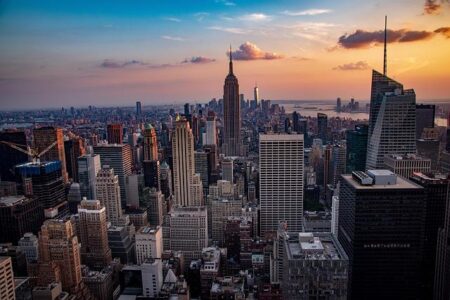
As the nation marks the 25th anniversary of the Sept. 11 attacks, ABC News presents a photo retrospective contrasting the devastation of that day with the dramatically transformed World Trade Center area today. Archival images of smoke-choked streets and rubble sit alongside contemporary photos of One World Trade Center, the Memorial’s twin reflecting pools and renewed public spaces, illustrating years of rebuilding, investment and remembrance. The series captures not only physical change – a rebuilt skyline and bustling transit hub – but also the enduring emotional landscape for survivors, family members and New Yorkers who continue to grapple with loss and resilience.
Then and Now Visual Record of the World Trade Center Site Over a Quarter Century
Photographs taken over a quarter century trace a dramatic transformation at ground zero: from scenes of destruction and rescue to carefully landscaped remembrance and a rising skyline. The images juxtapose the raw aftermath-curtains of dust, emergency crews, temporary barriers-with the quiet geometry of the Memorial pools and the glass façade of the new tower, capturing not just architecture but civic emotion. Bold markers in that visual record include 25 years of continuous documentation, the evolution from exclusion zones to public plazas, and the recurring civic rituals recorded in frames.
- 2001: Rubble, rescue, and recovery.
- 2011: Memorial pools, quiet reflection.
- 2026: Active transit hub, commercial towers, everyday city life.
These images function as evidence and narrative: they inform policy debates about security, design, and commemoration while shaping public memory. Journalists, architects and archivists point to the photos as a running chronicle that guided reconstruction decisions, influenced memorial programming, and documented how public access and urban design were negotiated over time.
| Year | Milestone |
|---|---|
| 2001 | Attack and immediate recovery operations |
| 2011 | Memorial dedication opens to the public |
| 2014-2016 | Major elements of the rebuilt site and transit hub come online |
| 2026 | Quarter-century photographic record highlights continuity and change |
How the Skyline and Memorial Landscape Have Changed and What That Reveals About Collective Memory
Photographs taken across a quarter-century trace more than architecture; they chart a conversation between loss and reclamation. Where the Twin Towers once defined Lower Manhattan, their absence became a visual punctuation-an emptiness that informed civic life as much as any skyline silhouette. Over time that void was answered not by a single likeness but by a layered response: a soaring market tower, lower-profile office buildings, transit infrastructure and landscaped memorials. Absence, rebuilding and resilience read like chapters in the city’s skyline, each new elevation reshaping how passersby remember the day and how the city markets itself to the world.
The memorial landscape has similarly shifted from spontaneous shrines to a curated site of remembrance and urban utility, signaling how collective memory is institutionalized. Photographs juxtaposing 2001 and 2026 reveal choices-material, spatial and curatorial-that communicate what should be mourned, celebrated or normalized. Key takeaways include:
- Names and negative space formalize mourning into a permanent public record.
- Commercial redevelopment asserts recovery but raises questions about commercialization of tragedy.
- Designs that invite everyday passage transform private grief into shared ritual.
| Feature | Significance |
|---|---|
| Reflecting pools | Sanctuary and focus for remembrance |
| One World Trade Center | Symbol of economic resilience |
| Transit Hub | Integration of memory into daily life |
Evolution of Security Transit and Public Space with Recommendations to Improve Access and Resilience
The sweeping photo comparison of the World Trade Center district underscores a transformation from a post‑9/11 security-first posture to a layered, civic landscape that still bears visible safety infrastructure. Where concrete barriers and restricted corridors once dominated, new plazas, integrated transit hubs and hardened façades coexist with reopened sightlines and memorialized space – a shift driven by federal security policy, city planning mandates and community advocacy. Urban planners note that the area’s evolution reflects a compromise between public access and risk mitigation, with transit nodes like PATH and subway entrances redesigned to channel flows while enabling rapid response and surveillance without wholly privatizing the street.
- Improve wayfinding: clearer pedestrian routing between transit, memorials and commercial spaces.
- Universal access upgrades: prioritize ramps, elevators and step-free transfers at hubs.
- Redundancy in transit links: alternate routing and real‑time capacity data to prevent bottlenecks.
- Resilient infrastructure: flood‑proofing, hardened utilities and flexible street design.
- Community stewardship: public input panels to balance security needs with everyday use.
Experts say implementing these measures requires coordinated funding and governance across agencies; pilots that combine subtle physical security with digital monitoring and community programming can enhance resilience without recreating fortress‑like conditions. The prescription is pragmatic: small, visible wins – improved signage, accessible connections, and programmable public spaces – paired with strategic investments in redundancy and climate adaptation, will better reconcile safety and openness for the next 25 years.
Lessons for Commemoration Policy and Practical Guidance for Visitors Families and City Leaders
Memorial policy must be as much about living cities as it is about memory. Lessons from the World Trade Center’s 25-year transformation underline the need for policies that balance permanence with adaptability, and ceremony with everyday use. Policymakers should prioritize accessibility, inclusivity and clear interpretive signage, while building contingency plans for security, crowd management and mental-health support around anniversary events. Practical measures include:
- Design for daily life: integrate memorial spaces with transit and public plazas to avoid exclusionary zones.
- Layered commemoration: allow for rotating exhibits, oral histories and digital archives so remembrance evolves over time.
- Preparedness: establish protocols for crowd control, weather contingencies and crisis communication.
- Family-centered services: ensure on-site counseling, quiet spaces and clear visitor information for survivors and relatives.
These steps help cities honor loss without freezing urban fabric, and give families and visitors predictable, respectful ways to engage.
On the ground, simple guidance can reduce strain on survivors and civic systems alike. For visitors: plan visits outside peak hours, respect memorial rules, and use official resources for photo permissions. For families: coordinate with memorial staff in advance, ask about private commemoration options, and request mental-health supports when needed. For city leaders: commit to sustained funding, community outreach and training for public employees who interact with mourners. Quick reference:
| Audience | Practical Action |
|---|---|
| Visitors | Respect hours, use official guides, expect security screening |
| Families | Request private spaces, access counseling, coordinate memorial timelines |
| City leaders | Fund maintenance, train staff, engage community partners |
These are not symbolic gestures alone but operational imperatives: clear rules, staffed supports and flexible design make commemoration sustainable and humane.
In Summary
These images underscore how dramatically the World Trade Center site has been transformed over 25 years – from scenes of destruction and rescue in 2001 to a rebuilt skyline anchored by the National September 11 Memorial & Museum and One World Trade Center. They also serve as a lasting reminder of lives lost, the sacrifices of first responders and the ongoing public conversations about memory, security and urban renewal.
As the city and nation mark the anniversary, the photos invite reflection on both loss and resilience and document a site that continues to evolve. For more perspectives and the full gallery, see our related coverage.