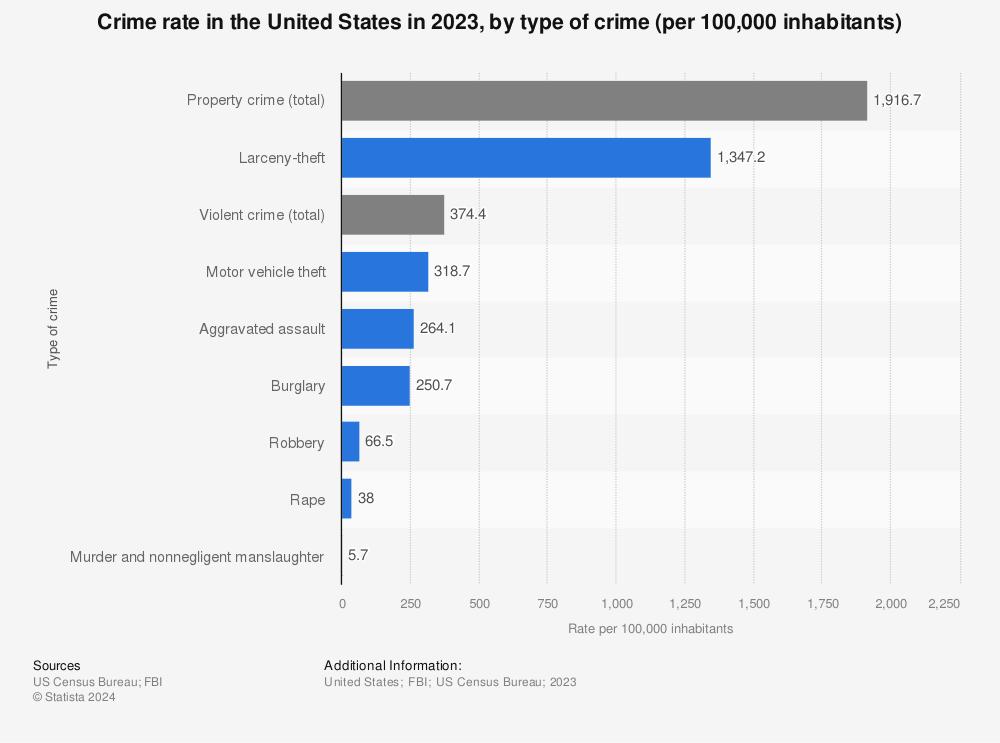
The landscape of crime across the United States in 2023 reveals significant variations from state to state, underscoring ongoing challenges and shifts in public safety. According to the latest data compiled by Statista, crime rates have fluctuated in diverse ways, influenced by factors ranging from economic conditions to law enforcement policies. This article delves into the most recent statistics on crime rates by state, offering a comprehensive overview of where rates have risen, where they have declined, and what these trends may signal for communities nationwide.
Crime Rate Trends Across US States in 2023
Analyzing crime across various U.S. states reveals a mixed picture of progress and persistent challenges in 2023. While several states reported significant reductions in violent crime rates, including Arizona and Georgia, others such as Louisiana and New Mexico saw alarming increases. Economic factors, law enforcement strategies, and community engagement are widely cited as influential in these divergent trends. Notably, urban centers tend to experience higher crime rates compared to rural areas, underscoring the ongoing need for targeted public safety initiatives.
Key factors influencing these crime shifts include:
- Economic recovery disparities post-pandemic
- Policing policy reforms and funding levels
- Community-based intervention programs
- Demographic changes and migration patterns
| State | Violent Crime Rate (per 100k) | Change from 2022 |
|---|---|---|
| Arizona | 450 | -8% |
| Louisiana | 740 | +12% |
| Georgia | 380 | -5% |
| New Mexico | 670 | +10% |
Analyzing Factors Driving Regional Crime Variations
Regional crime disparities in the U.S. often stem from a complex interplay of economic, social, and environmental factors. States with higher unemployment rates and lower median incomes tend to experience elevated crime levels, as financial stress can lead to increased desperation and illicit activities. Additionally, urbanization plays a critical role; densely populated metropolitan areas usually report more incidents of violent and property crimes due to greater social interaction and opportunities for offenses. Conversely, rural regions typically register lower crime figures but may see spikes in specific crimes such as drug-related offenses.
Key drivers influencing these variations include:
- Socioeconomic status: Income inequality and poverty rates directly correlate with crime prevalence.
- Law enforcement presence: Budget allocations and policing strategies impact crime deterrence.
- Demographic composition: Age distribution and population mobility affect crime patterns.
- Education levels: Lower educational attainment can increase vulnerability to criminal behavior.
| State | Unemployment Rate (%) | Urbanization Level | Crime Rate Index (2023) |
|---|---|---|---|
| California | 6.8 | High | 78.4 |
| Texas | 5.2 | Medium | 65.3 |
| Ohio | 4.9 | Medium | 43.5 |
| Alaska | 5.0 | Low | 58.7 |
Impact of Socioeconomic Conditions on State Crime Rates
Economic disparities remain a critical factor influencing the distribution of crime rates across the United States. States grappling with high poverty levels and unemployment typically report elevated crime incidents, especially violent crimes and property offenses. Limited access to quality education and social services exacerbates community vulnerabilities, often creating environments where illicit activities can thrive. Urban areas within these states frequently show heightened crime patterns due to concentrated socioeconomic challenges.
To illustrate the correlation,the table below highlights selected states with varying economic indicators and their corresponding crime rates per 100,000 inhabitants in 2023:
| State | Unemployment Rate (%) | Poverty Rate (%) | Crime Rate |
|---|---|---|---|
| Mississippi | 5.2 | 19.7 | High |
| California | 4.1 | 13.9 | Moderate |
| New Hampshire | 2.6 | 7.3 | Low |
Key factors contributing to state-level crime disparities include:
- Income inequality: The gap between wealth and poverty fuels desperation and crime.
- Education gaps: Lower educational attainment correlates with higher offending rates.
- Community infrastructure: States with underfunded public services face greater crime challenges.
Strategies for Law Enforcement and Community Safety Improvements
Addressing rising crime rates requires a multi-faceted approach that prioritizes both proactive and reactive measures. Law enforcement agencies are increasingly embracing data-driven policing, utilizing advanced analytics to identify hotspots and allocate resources effectively. Collaboration with community organizations has also proven essential,fostering trust and encouraging residents to participate actively in reporting and preventing crime.Among effective strategies are:
- Community policing initiatives that build rapport and promote open dialog.
- Investment in technology such as surveillance tools and predictive analytics software.
- Regular training programs for officers focused on de-escalation and cultural competency.
- Focused deterrence programs targeting repeat offenders and high-risk groups.
To further illustrate how specific strategies impact safety outcomes,the table below outlines three prominent approaches and their average effectiveness based on recent studies:
| Strategy | Crime Reduction (%) | Community Engagement Level | Implementation Complexity |
|---|---|---|---|
| Community Policing | 18% | High | Medium |
| Predictive Analytics | 12% | Medium | High |
| Focused Deterrence | 21% | Low | Medium |
Concluding Remarks
As the 2023 crime statistics reveal varying trends across U.S. states, policymakers and law enforcement agencies face the ongoing challenge of addressing regional disparities and root causes of crime. While some states report declines in key categories, others experience troubling increases that underscore the need for targeted interventions. Continued analysis and responsive strategies will be essential to ensuring public safety and fostering resilient communities nationwide in the years ahead.