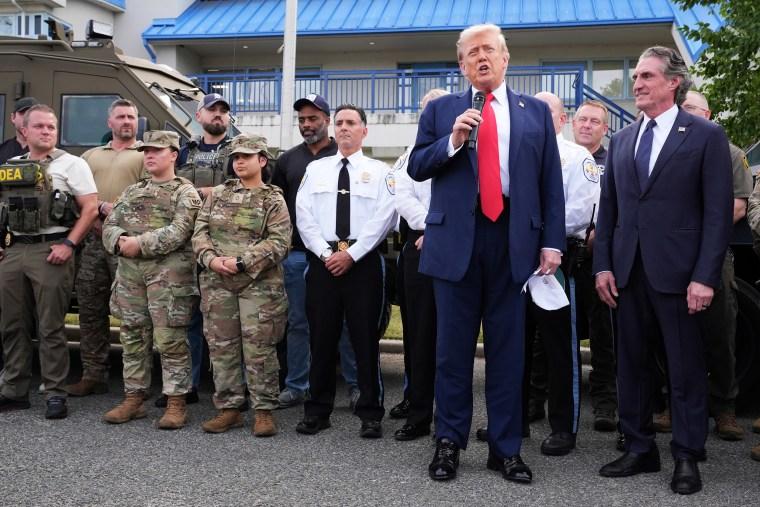
President Donald Trump’s recent statement threatening to deploy the National Guard to New York City has drawn sharp criticism from local officials, with Governor Kathy Hochul condemning the remarks as an insult to the city’s police force. The escalating tension between federal and state authorities highlights ongoing debates over public safety and the appropriate role of military forces in managing urban crime.As the conversation unfolds, questions arise about the effectiveness and implications of such a federal intervention in one of the nation’s largest metropolitan areas.
President Trump’s Threat to Deploy National Guard to New York City Sparks Backlash
Governor Kathy Hochul strongly condemned President Trump’s recent declaration to deploy the National Guard to New York City, labeling the move as an affront to the city’s local law enforcement.She emphasized that the New York Police Department (NYPD) is well-equipped and committed to maintaining public safety without federal intervention. Critics argue that the proposal undermines the professionalism and dedication of local officers who face complex urban challenges daily.
Opposition to the plan has come from various quarters, highlighting concerns over the potential impact on community relations and the overall message it sends about local governance and autonomy. Key points raised include:
- Local expertise: NYPD’s deep understanding of city dynamics and neighborhood-specific issues.
- Community trust: Risk of eroding public confidence due to perceived heavy-handed federal involvement.
- Jurisdictional tensions: Possible conflicts arising from dual authority in law enforcement efforts.
| Stakeholder | Position | Concerns |
|---|---|---|
| Governor Kathy Hochul | Opposed | Insult to local police, needless intervention |
| NYPD Leadership | Defensive | Confident in capabilities, wary of federal overreach |
| Community Activists | Critical | Fear of militarization, weakening of community policing |
Governor Kathy Hochul Criticizes Move as Undermining Local Law Enforcement Authority
Governor Kathy Hochul sharply condemned the proposal to deploy the National Guard to New York City, stressing that it disregards the capabilities and efforts of the city’s established police force. She emphasized that such federal intervention not only undermines local authority but could potentially complicate the coordination needed for effective public safety measures.
The governor highlighted key concerns surrounding the move, including:
- Disruption of seamless cooperation between city officials and the NYPD
- Risk of politicizing local law enforcement by introducing external forces
- Potential erosion of community trust cultivated by local officers over years
| Aspect | Governor Hochul’s Position | Potential Impact |
|---|---|---|
| Local authority | Must be respected and preserved | Maintains clear jurisdiction |
| Law enforcement cooperation | Should remain unified under city control | Ensures operational efficiency |
| Community relations | Local officers build essential trust | Supports public confidence |
Analysis of the Political Implications for Federal-State Relations
President Trump’s threat to deploy the National Guard to New York City has amplified tensions between federal and state governments, bringing to the forefront issues of local autonomy and law enforcement jurisdiction. Governor Kathy Hochul’s strong rebuke reflects a broader political clash over authority, underscoring the sensitivity of federal intervention in municipal affairs. This incident sharply illustrates how federal actions perceived as undermining local police efforts can deepen mistrust and complicate cooperation essential for effective governance.
Key political implications for federal-state relations include:
- Strain on collaborative law enforcement initiatives: Such threats can hamper ongoing partnerships by fostering skepticism among local agencies about federal motives.
- Potential erosion of local leadership credibility: When federal officials openly challenge local policies or personnel,it may weaken public confidence in elected state officials.
- Increased politicization of security measures: Law enforcement becomes entangled with partisan agendas,detracting from objective public safety goals.
| Aspect | Federal Position | State Position |
|---|---|---|
| Jurisdiction | Supports intervention to enforce order | Protects local policing autonomy |
| Public Messaging | Emphasizes federal responsibility for safety | Highlights local expertise and community trust |
| Political Impact | Frames issue as national law and order | Seeks to defend state sovereignty and dignity |
Recommendations for Strengthening Collaboration Between Federal and City Police Agencies
To foster more effective law enforcement efforts, there must be a clear, mutually respectful interaction channel between federal and city police agencies. Establishing joint task forces with defined roles and responsibilities can prevent overlap and jurisdictional conflicts, allowing resources to be deployed strategically. Emphasizing trust-building exercises, including regular inter-agency training and community engagement initiatives, can bridge gaps and cultivate a unified approach to public safety.
Key strategies to enhance collaboration include:
- Creating shared databases for intelligence and incident reporting to ensure transparency and quick details exchange.
- Implementing conflict resolution protocols to address misunderstandings promptly before they escalate.
- Assigning liaison officers dedicated to facilitating real-time coordination during critical incidents.
- Standardizing operational procedures to harmonize tactics and ensure consistency across agencies.
| Action | Benefit |
|---|---|
| Joint Training Programs | Improved tactical coordination |
| Data Sharing Platforms | Faster response times |
| Liaison Officers | Enhanced situational awareness |
| Community Policing Integration | Higher public trust |
Wrapping Up
In response to President Trump’s declaration to deploy the National Guard to New York City, Governor Kathy Hochul has condemned the move as an affront to the city’s law enforcement professionals. As tensions between federal and local officials continue to mount, the unfolding debate highlights the complexities of managing public safety in a city already grappling with crime and political division. The situation remains fluid, with both sides standing firm on their positions, underscoring the challenges of balancing federal intervention with local autonomy in addressing urban security concerns.