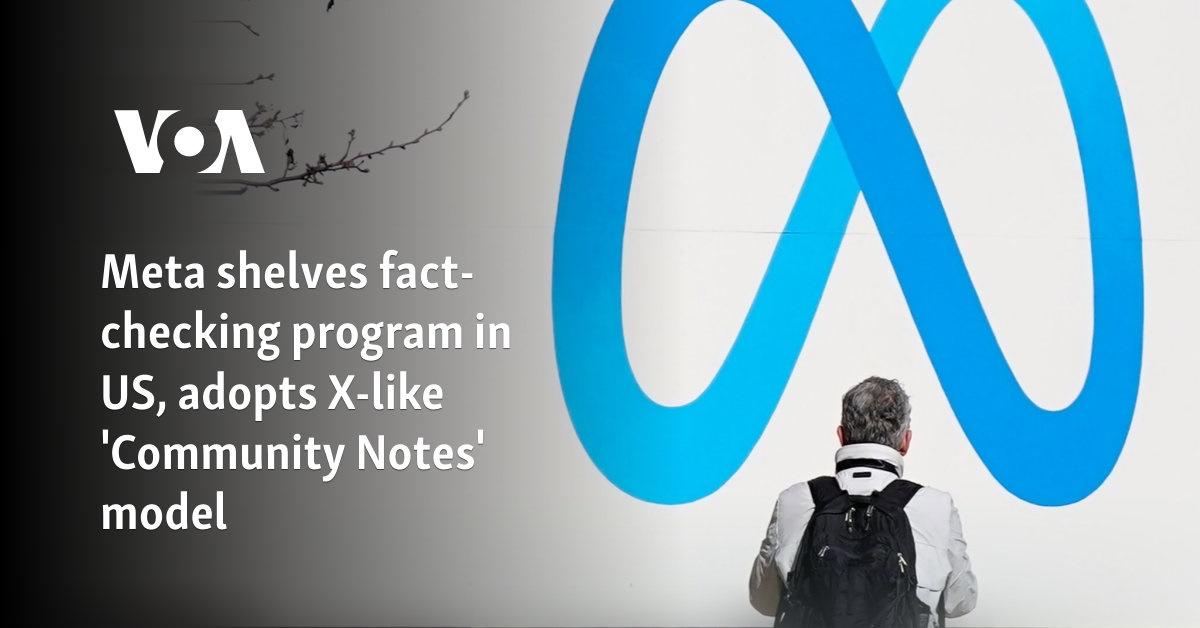
Meta, the parent company of Facebook and Instagram, has announced it will be ending its fact-checking program for social media posts, a significant shift in its approach to content moderation.The program, which has been in place for several years, relied on independent fact-checkers to review and flag false or misleading data shared on its platforms. Meta’s decision, reported by The New York Times, marks a pivotal change in how the tech giant plans to handle misinformation, raising questions about the future of digital information integrity and the role of social media in public discourse.
Meta to Discontinue Fact-Checking Program Amid Rising Concerns Over Content Moderation
In a strategic move that has sparked widespread discussion about the future of online content regulation, Meta announced it will terminate its third-party fact-checking program. This decision comes at a time when concerns over the effectiveness and fairness of content moderation are escalating, with critics arguing that the current system struggles to balance free expression and misinformation control. Meta’s leadership emphasized that the company aims to explore new methods to address misinformation, possibly through a combination of advanced AI tools and community-driven guidelines.
Key factors influencing this shift include:
- Increasing skepticism towards external fact-checkers and allegations of bias.
- The growing volume and complexity of misinformation that challenges manual verification.
- Pressure from diverse global markets demanding culturally sensitive moderation practices.
| Impact Area | Current Challenge | Future Direction |
|---|---|---|
| User Trust | Confusion over flagged content | Improve transparency with clearer alerts |
| Content Volume | Manually overwhelmed fact-checkers | Leverage AI for preliminary content analysis |
| Global Reach | One-size-fits-all moderation issues | Adapt localized content policies |
Impact on Social Media Users and the Spread of Misinformation
With Meta’s decision to discontinue its fact-checking initiative, social media users face a landscape where the verification of information could become increasingly inconsistent. The absence of this program means many posts will no longer undergo professional review, perhaps leading to a surge in unverified and misleading content. This shift raises critical concerns about the platforms’ ability to safeguard users from false narratives, as the reliance on community reports and automated systems may prove insufficient in mitigating misinformation effectively.
Key consequences likely to unfold include:
- Increased prevalence of viral misinformation due to reduced content screening
- Greater challenge for users to distinguish between credible news and false claims
- Heightened risk of harmful content influencing public opinion and behavior
- Potential growth of divisive echo chambers amplified by unchecked posts
| Impact Area | Potential Outcome |
|---|---|
| Content Credibility | Diminished trust in shared stories and news |
| User Engagement | Polarization fueled by unchecked misinformation |
| Platform Reputation | Increased scrutiny and criticism from regulators and public |
| Information Ecosystem | More fragmented and unreliable source network |
Expert Analysis on the Potential Consequences for Online Discourse
Experts warn the cessation of Meta’s fact-checking initiative could dramatically shift the landscape of digital conversations. By removing this layer of content verification, platforms may become increasingly vulnerable to misinformation, which might erode public trust and amplify divisive narratives.Specialists emphasize that without real-time fact verification, social media users might face heightened exposure to unsubstantiated claims, potentially deepening societal polarization.
Key concerns highlighted by thought leaders include:
- Surge in misinformation: The absence of moderation could encourage rapid spread of false data.
- Accountability gaps: Users and platforms might find it harder to self-regulate harmful or misleading material.
- Impact on democratic processes: Unchecked misinformation may influence elections and public policy discussions negatively.
- User confidence erosion: A decline in trustworthiness might push users to seek alternatives or disengage.
| Potential Consequences | Expert Perspective |
|---|---|
| Growth in conspiracy theories | Significant increase,experts anticipate rapid misinformation spread |
| Reduced content oversight | Leads to weaker moderation enforcement and greater platform liability |
| Community polarization | Echo chambers may deepen as users encounter unchecked claims |
| Declining user trust | Users may lose faith in platform reliability and fairness |
Strategies for Users to Verify Information Independently Post Meta Announcement
With Meta discontinuing its internal fact-checking initiative,users must adopt a vigilant approach to assess the credibility of social media content themselves. A critical step is cross-referencing information using multiple reputable sources before accepting claims as true. Employing search engines to trace original data, examining publication dates, and verifying authorship can help filter out misinformation embedded within viral posts. Additionally, users should remain cautious of emotionally charged or sensational headlines that frequently enough distort facts to amplify engagement.
Digital literacy tools and browser extensions designed to evaluate news credibility can serve as valuable allies in independent verification. Here are some practical tips:
- Check diverse news outlets for consensus or contradictions on the subject.
- Utilize fact-checking websites such as Snopes, FactCheck.org, and PolitiFact.
- Analyze images and videos using reverse image searches to detect manipulation.
- Review official statements from credible organizations related to the topic.
| Verification Step | Tool/Method | Purpose |
|---|---|---|
| Source Cross-Check | Multiple reputable outlets | Confirm consistency and reliability |
| Content Authenticity | Reverse Image & Video Search | Identify edits or deepfakes |
| Fact-Checking | Dedicated Fact-Check Sites | Clarify factual accuracy |
| Official Confirmation | Statements from Authorities | Verify direct involvement or endorsement |
Closing Remarks
As Meta moves to conclude its fact-checking program on social media posts,the decision marks a significant shift in how the company addresses misinformation on its platforms. Critics and supporters alike will be watching closely to see how this change impacts the spread of false information and the overall user experience. As the digital landscape continues to evolve, the effectiveness of new approaches to content moderation remains a critical area for both technology companies and the broader public.