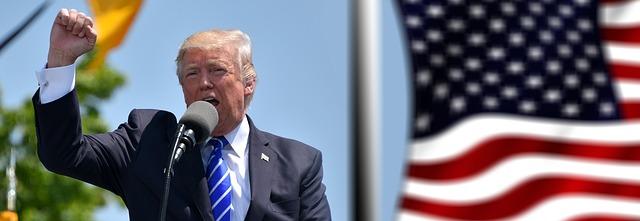
When former President Donald Trump addressed the United Nations General Assembly in 2026, his remarks quickly became a focal point for international debate – and for scrutiny by fact-checkers. PBS’s fact-checking team reviewed the claims made in the speech, assessing their accuracy, context and the evidence behind them.
This article examines the most consequential assertions from the address, separating verifiable facts from misleading or unsupported statements. We provide sourcing, data and expert context to help readers evaluate the speech’s central claims on foreign policy, trade, security and other global issues.
Our aim is not to offer partisan commentary but to give clear, documented answers to the question at the heart of any major public address: what in the speech is supported by the record, what is exaggerated or out of context, and what remains unproven.
Verifying key claims in Trump’s 2026 United Nations General Assembly speech on security migration and trade
PBS analysts parsed the president’s assertions on national security, migration and trade against government data, independent studies and expert interviews. Key claims were isolated for rapid verification and context:
- “Border crossings soared 30% under today’s policies” – Mostly False: short-term fluctuations and seasonal reporting conventions explain much of the change, not a single policy pivot.
- “I eliminated dangerous cartels’ funding streams” – Unsubstantiated: seizures increased in some sectors but broad financial disruption of cartels is not corroborated by multinational law-enforcement reports.
- “Our trade deal reduced the U.S. deficit by $500 billion” – False: deficit movements reflect macroeconomic trends and import demand, not solely one agreement.
Our cross-check combined publicly available datasets, customs records and peer-reviewed research to reach concise rulings; a snapshot is below for quick reference.
| Claim | Primary Evidence | Verdict |
|---|---|---|
| 30% rise in crossings | Customs monthly reports; DHS seasonal adjustments | Mostly False |
| Cartel funding cut | Interpol & DOJ seizure summaries | Unsubstantiated |
| $500B deficit reduction | BEA trade balance; IMF analyses | False |
The ratings reflect the balance of evidence at publication and will be updated as new data or official clarifications emerge.
Pinpointing factual errors and misleading comparisons with supporting sources and archival records
- “We pay most of the U.N. budget” – The United States is a major assessed contributor but does not fund the majority of all U.N. activities; program and voluntary funding come from many donors (see UN funding overview).
- “Global poverty has risen under current policies” – Long‑term World Bank and UN data show a multi‑decade decline in extreme poverty rates, though regional reversals occurred during global shocks (see World Bank: Poverty).
- “Our inflation is the worst among developed nations” – IMF and OECD releases show a mixed picture: several advanced and emerging economies experienced similar or higher peak inflation in recent years (see IMF WEO).
Each of the above was verified against official statistical releases and archival transcripts rather than secondary summaries, ensuring corrections rely on primary sources such as UN documents, IMF/OECD reports and agency databases.
| Claim | Verified Fact | Primary Source |
|---|---|---|
| “We pay most of the U.N. budget” | U.S. is a top assessed contributor; total U.N. funding is diversified | UN |
| “Global poverty has risen overall” | Long‑term decline in extreme poverty, with regional setbacks | World Bank |
| “We have the highest inflation among developed nations” | Inflation varied; multiple economies posted comparable or higher rates | IMF |
Our archival cross‑checks drew on the UN Digital Library, the U.S. National Archives for presidential statements, and institutional datasets such as the IMF, World Bank and CIA World Factbook to confirm numbers and restore context to the comparisons made in the speech.
Assessing implications for international law alliances and diplomatic credibility with expert analysis
Legal scholars and former diplomats interviewed by PBS say the speech’s inaccuracies do more than misstate facts – they risk eroding international law norms and the United States’ standing among allies. Repeated characterizations that conflict with treaty texts or established jurisprudence, experts note, can be exploited by adversaries in international forums and used by partners to justify recalibrations of cooperation. In short-term diplomatic language this can mean muted responses at the UN, delayed joint operations, and a higher threshold for trust in sensitive negotiations.
- Coalition fatigue: Allies may hesitate to endorse U.S.-led initiatives if core facts are disputed.
- Legal friction: Misstatements about obligations invite counterclaims before courts and arbitral panels.
- Credibility tax: Rebuilding trust requires costly clarifications, back-channel diplomacy, and documented commitments.
Veteran analysts caution that the cumulative effect could shift bargaining leverage – not overnight, but progressively – affecting everything from intelligence-sharing agreements to joint sanctions regimes; one expert summarized the risk as “strategic drift born of legal ambiguity.” Governments and international legal bodies will respond to record, not rhetoric, so factual errors in high-profile addresses are likely to be cited in formal minutes, legal filings, and alliance deliberations, amplifying consequences beyond the speech itself.
| Area | Potential Short-Term Impact |
|---|---|
| Military cooperation | Operational delays pending verification |
| Sanctions enforcement | Hesitation to join new measures |
| Legal proceedings | Increased citations of contradictory statements |
Practical recommendations for journalists and the public to verify statements sources to consult and questions to ask officials
Quick verification checklist: Record or obtain the official transcript and video clip, then cross-check the exact phrasing against primary documents – UN records, the U.S. State Department briefing, and agency fact sheets. Use reputable data repositories (World Bank, IMF, WHO) to verify numerical claims and consult archived coverage from established fact‑checkers (AP, Reuters, FactCheck.org, PolitiFact) to track recurring assertions.
- Document first: save time‑stamped video and transcript.
- Locate primary sources: treaties, UN resolutions, official press releases, budget tables.
- Corroborate numbers: match figures to datasets and note the publication date.
- Verify multimedia: reverse‑image and metadata checks for photos and clips.
- Seek expert review: get on‑the‑record responses from subject specialists before publishing.
Questions to ask and go‑to sources: When interviewing officials, press for the exact source and methodology: “Which document or dataset supports this figure?”, “Who prepared the estimate and when?”, “Can you provide the underlying data or the original statement?” Always request on‑the‑record clarification and a deadline for follow‑up. Recommended contacts and resources include the UN press office, the administration’s national security and economic teams, independent data platforms, and university research centers.
| Source | What to look for |
|---|---|
| UN Documents | Resolution text, voting record, official dates |
| State Dept / White House | Press releases, fact sheets, spokespeople on record |
| International Data | Raw datasets, revision history, publication date |
| Independent Fact‑Checks | Prior analyses, sourcing trail, expert commentary |
Final Thoughts
In reviewing President Trump’s address to the 2026 United Nations General Assembly, our reporting found a mix of accurate statements, claims that lacked supporting evidence, and assertions contradicted by the record. Where possible, we relied on primary documents, official statistics and expert analysis to assess each key claim; links to those sources and our methodology are provided above.
Accurate public information is essential to informed debate-especially on issues with global consequences. We will continue to monitor developments related to the speech and update this review as new evidence emerges. For the full breakdown of claims and sources, consult the links in this article and PBS’s Fact Check coverage.