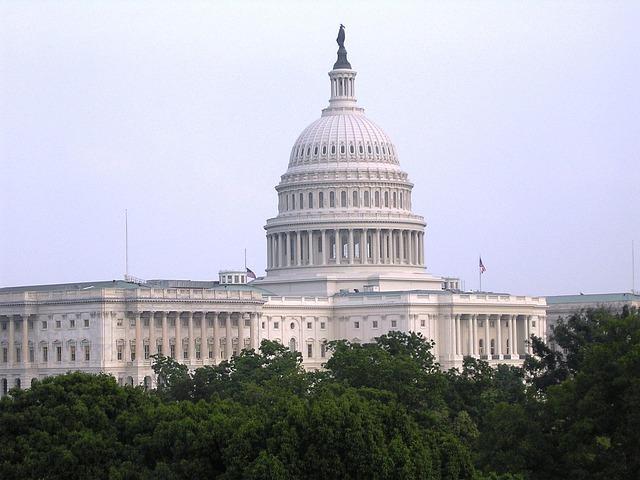
US Democrats are quietly shifting gear, moving away from the culture-war battlegrounds of identity politics and toward a message centered on economic inequality and working‑class concerns. Party leaders and strategists, mindful of voter anger over inflation, stagnant wages and the erosion of blue‑collar support, say the recalibration is designed to broaden appeal ahead of the next election cycle.
The pivot – which has surfaced in campaign playbooks, fundraising appeals and high‑profile speeches – could reshape policy priorities and reopen fault lines between the party’s progressive base and its pragmatic operatives. Analysts warn the change carries risks as well as opportunities, with internal tensions likely as Democrats attempt to balance calls for social justice with a renewed focus on jobs, wages and the cost of living.
From culture war to class war: Democrats abandon woke rhetoric and recalibrate for economic populism
In a strategic pivot underscored by party leaders and campaign operatives, Democrats are shedding culturally focused messaging in favor of a program that centers on material grievances and pocketbook issues. Reporters on the ground note a deliberate recalibration: speeches and briefing documents now foreground job security, health costs and corporate accountability, while rhetoric tied to identity politics is being downplayed in swing districts. The shift is being framed as a bid to reconnect with working-class voters and the suburban electorate that proved decisive in recent cycles, with attention paid to both legislative wins and more accessible, tangible messaging on everyday economic pressures.
Campaign strategists point to a concise set of priorities driving the new playbook:
- Higher wages and stronger unions
- Affordable healthcare and prescription reform
- Antitrust enforcement and corporate taxation
A simple table circulating among operatives summarizes the rationale behind the pivot:
| Priority | Why it matters |
|---|---|
| Wages | Restores purchasing power |
| Healthcare | Reduces household shocks |
| Antitrust | Limits corporate price-setting |
Analysts say the outcome will depend on whether policy proposals are paired with clear, relatable narratives that translate into votes-an execution test that will define the party’s message through the next cycle. Economic populism, not culture skirmishes, is now being packaged as the pathway back to competitive majorities.
Policy priorities to seal the shift: strengthen labor rights, expand childcare and healthcare and invest in regional manufacturing
Democrats are repositioning around a practical economic agenda designed to translate cultural redirection into tangible voter gains: a focus on workplace power, family supports and local industrial revival. The policy package centers on stronger collective bargaining, universal early-years care and expanded healthcare access, paired with targeted investment to reshore manufacturing to smaller cities and towns. Key measures being discussed include:
- Labor reform: enforceable collective bargaining rights, higher minimum wages, and anti-retaliation protections for organizers;
- Childcare and family support: subsidized universal pre-K, sliding-scale childcare credits, and paid family leave;
- Healthcare expansion: Medicaid enhancements, community health center funding, and price negotiation powers for prescription drugs;
- Regional manufacturing: tax credits for local plants, federal procurement preferences, and green technology hubs.
Legislative staff and union strategists say the package is deliberately modular – each element can be advanced separately to build momentum and public buy‑in.
Analysts project that the combination could deliver near-term economic relief and longer-term political consolidation by converting cultural debates into class-based ballot issues. Early modelling from policy shops estimates measurable outcomes from modest federal commitments:
| Program | Estimated impact (per $1bn) | Short-term beneficiaries |
|---|---|---|
| Childcare subsidies | Creates ~6,000 jobs | Families with children under 5 |
| Regional manufacturing grants | Creates ~3,500 jobs | Small manufacturing towns |
| Community health funding | Puts ~1,200 providers to work | Rural and underserved areas |
Political operatives caution the reforms require a calibrated rollout – the aim is pragmatic gains that can be tallied by voters in the next midterms rather than abstract cultural positioning.
Messaging overhaul for battleground voters: simplify economic narratives, localize solutions and couple identity inclusivity with tangible benefits
Democratic operatives in battleground states have pared back abstract cultural arguments in favor of a streamlined, pocketbook-first narrative aimed at persuadable voters. Campaigns are prioritizing clear, local outcomes – higher take-home pay, predictable healthcare costs and more reliable childcare – framed as immediate fixes rather than ideological victories. Key messaging pillars being tested in focus groups include:
- Wage growth tied to local job projects
- Lower everyday costs through targeted rebates and prescription caps
- Community stability via school and transit investments
Sources say the tone is deliberately plainspoken: reduce cognitive friction, name a problem, offer a concrete, local solution and show how it lands in residents’ wallets.
Campaign strategists emphasize that inclusivity rhetoric will not be abandoned but reframed as paired with tangible benefits – a practice they argue is more persuasive with swing demographics. Early field reports indicate that messages coupling identity-conscious language with direct economic gains outperform standalone cultural appeals. The table below summarizes simple local translations of broader promises:
| Policy | Local framing |
|---|---|
| Paid family leave | Protects paychecks when kids get sick |
| Healthcare reform | Lower ER bills, more clinics nearby |
| Union protections | Better wages for factory and service jobs |
Political analysts caution the approach is tactical rather than doctrinal: its success will be measured not by purity of message but by measurable shifts in turnout and persuasion in key precincts.
Organizing and funding blueprint for revival: rebuild field operations in neglected communities, prioritize union partnerships and target infrastructure investment
Senior strategists unveiled a concentrated plan to rebuild grassroots capacity in long-neglected neighborhoods, arguing that electoral gains depend as much on boots-on-the-ground as on messaging. Reorienting resources toward local field operations and union partnerships is central: the memo proposes co-funding organizer salaries with labor affiliates, restoring precinct-level canvass teams and deploying rapid-response grants to community groups.
- Recruit and train local organizers with union support
- Joint funding models: party + unions for staff and training
- Micro-grants to community-led voter engagement projects
- Restore transportation and field infrastructure (vans, phones, data)
Parallel to staffing, the blueprint prioritizes targeted infrastructure investment as a tool of political and economic revival, using data to identify high-impact projects that create jobs and expand services. A short, pragmatic table circulated with the plan shows where investment can produce measurable returns within election cycles and beyond:
| Investment | Short-term jobs | Long-term benefits |
|---|---|---|
| Transit repairs | Local contractors | Commuter access, turnout |
| Broadband buildout | Install crews | Remote work, education |
| Community centers | Construction & staff | Civic hubs, organizer bases |
The proposal urges blended funding-federal dollars, municipal bonds and union-backed capital-to ensure projects are politically resonant and operationally sustainable.
Wrapping Up
As Democrats temper cultural messaging in favour of an economic, class-focused pitch, the party is embarking on a strategic recalibration that could redefine its policy priorities and electoral appeal. Whether the shift endures will depend on the party’s ability to convert rhetoric into concrete measures that address living standards and sway skeptical voters without fracturing its coalition. The coming election cycles will be the decisive test – for Democrats seeking votes in battleground districts and for Republicans forced to respond – and, whichever way it goes, American political debate looks set to move from symbolic fights to contests over jobs, wages and the distribution of economic power.