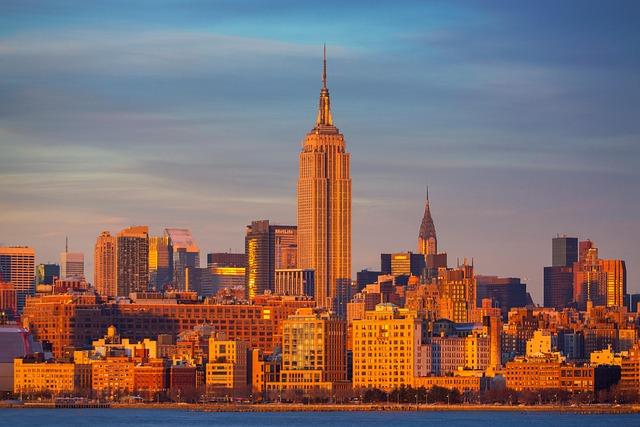
A couple who allegedly staged what appeared to be a marriage proposal atop the Empire State Building are facing a series of criminal charges, New York authorities said. The stunt, which drew widespread attention after photographs and video circulated online, prompted a security response and prompted an investigation by building officials and the NYPD. Prosecutors say the pair will be charged with multiple offences related to the incident as officials review how the event unfolded and whether public safety was compromised.
Couple faces slew of charges after staged proposal atop Empire State Building as prosecutors open criminal inquiry
Manhattan prosecutors have opened a criminal inquiry after authorities say a pair staged an apparent marriage proposal on the outdoor observation deck of a major Midtown landmark, triggering a security scramble and the couple’s subsequent arrest. Officials described the incident as a planned stunt that interfered with public safety and building operations; prosecutors say the matter has produced a slew of charges. Allegations now under review include:
- Trespassing on restricted premises
- Disorderly conduct and creating a public nuisance
- Reckless endangerment
- Criminal mischief
- Conspiracy or coordinated disruption
The DA’s office told reporters investigators are examining video and social-media evidence to determine whether the act was premeditated and whether additional charges should follow.
Legal analysts say the couple could face a mix of criminal and civil consequences if convicted or sued, and the building’s operator has launched an immediate review of visitor screening and staff protocols after the episode drew swift online attention. Law enforcement sources indicated penalties could range from fines and misdemeanor sanctions to felony exposure in the most serious counts, depending on intent and any demonstrated risk to visitors. Observers noted three broad implications:
- Heightened scrutiny of public-safety procedures at tourist sites
- Increased enforcement against staged stunts that endanger the public
- Greater use of social-media evidence in prosecutions
| Example charge | Potential outcome |
|---|---|
| Trespassing | Fine or misdemeanor penalty |
| Reckless endangerment | Possible jail time if proven |
| Disorderly conduct | Misdemeanor charge, fines |
Prosecutors said the inquiry remains active and cautioned that charges and outcomes will depend on the full record of intent, harm and coordination uncovered during the investigation.
Authorities allege trespass, reckless endangerment and disorderly conduct with eyewitness accounts and surveillance footage forming case
Authorities say the couple’s brief spectacle has evolved into a criminal case after investigators reviewed footage and gathered statements from multiple witnesses. Prosecutors contend the pair climbed restricted areas of the Empire State Building and lingered in zones reserved for staff and maintenance, actions they describe as trespass and reckless endangerment that imperiled passersby and emergency responders. Detectives also point to chaotic scenes on observation decks and stairwells captured on surveillance cameras, which they say contradict the couple’s account of a spontaneous, harmless moment.
Investigators list several pieces of corroborating evidence:
- Surveillance video showing entry into non-public areas and movement against posted warnings
- Eyewitness accounts from tourists and employees describing obstruction and alarmed reactions
- Security logs and staff radio transcripts documenting the response
| Charge | Alleged Act | Note |
|---|---|---|
| Trespass | Accessing restricted rooftop area | Filed by MTA police |
| Reckless endangerment | Creating hazard for visitors | Based on witness reports |
| Disorderly conduct | Obstructing pedestrian flow | May include fines |
Security, permitting and emergency response failures at iconic landmark exposed amid incident
The stunt that culminated in an apparent proposal on one of the city’s most visible viewing platforms has prompted a swift inquiry into how basic safeguards were bypassed and why routine checks did not prevent the breach. Preliminary reviews by building operators and municipal regulators point to lapses across several layers: perimeter screening did not detect the individuals carrying non-standard equipment, access controls at restricted points were inconsistently enforced during peak tourist hours, and surveillance camera coverage contained blind spots that allowed the couple to reach the vantage point without immediate intervention. The incident has also highlighted ambiguities in the venue’s event-permitting framework, raising questions about whether small private celebrations can be staged without formal notification or oversight when they occur in secure or elevated spaces.
Key failures:
- Access control gaps – tailgating and unsecured service routes.
- Permitting ambiguity – lack of clear rules for impromptu ceremonies.
- Emergency response delays – responders had limited rooftop access and coordination problems.
- Surveillance and staffing – camera blind spots and insufficient on-deck personnel.
| Failure | Immediate consequence |
|---|---|
| Unsecured entry points | Unauthorised rooftop access |
| Permitting gaps | Regulatory uncertainty |
| Communication breakdown | Slower incident containment |
Calls for action: experts recommend stricter access controls, clearer permit rules, coordinated enforcement and platform policies to deter dangerous publicity stunts
Legal and safety analysts say the episode exposed how easily high-profile landmarks can be exploited for viral stunts when access protocols are vague and enforcement is fragmented. They urged authorities and property managers to adopt tighter physical and digital access controls, create unambiguous permitting processes with clear penalties, and coordinate multi-agency responses so breaches are detected and prosecuted quickly. Recommended immediate steps include:
- Physical safeguards: reinforced perimeter security, badge-controlled zones, CCTV with tamper alerts and routine audits.
- Permit reform: standardized application windows, explicit prohibitions for stunts, automatic revocation clauses and proportionate fines.
- Coordinated enforcement: joint protocols between building owners, park services and police for rapid removal and evidence preservation.
- Platform accountability: expedited takedown pathways, de-prioritisation of stunt content and transparent reporting to investigators.
Experts also pressed social platforms to change incentive structures that reward dangerous behaviour, urging companies to combine machine detection with human review and to provide chains of custody for evidence handed to prosecutors. Below is a concise breakdown of who should act and how – a snapshot officials say could reduce repeat incidents and sharpen deterrents.
| Stakeholder | Immediate action |
|---|---|
| Site operators | Harden entry points; publish clear permit rules |
| Law enforcement | Fast-response units; preserve digital evidence |
| Social platforms | Remove stunt videos quickly; share data with authorities |
Insights and Conclusions
The episode, which has drawn widespread attention, underscores the risks – legal and safety-related – that can accompany stunts staged at high‑profile tourist sites. Beyond the immediate criminal exposure faced by the couple, the incident is likely to prompt renewed scrutiny of security protocols and enforcement at landmarks frequented by visitors and content creators.
Prosecutors must now weigh the evidence as the matter moves through the courts, while building authorities and law‑enforcement agencies consider whether additional measures are needed to prevent similar incidents. Whatever the outcome, the case will be watched for what it signals about accountability and public‑safety priorities at some of the city’s most iconic locations.