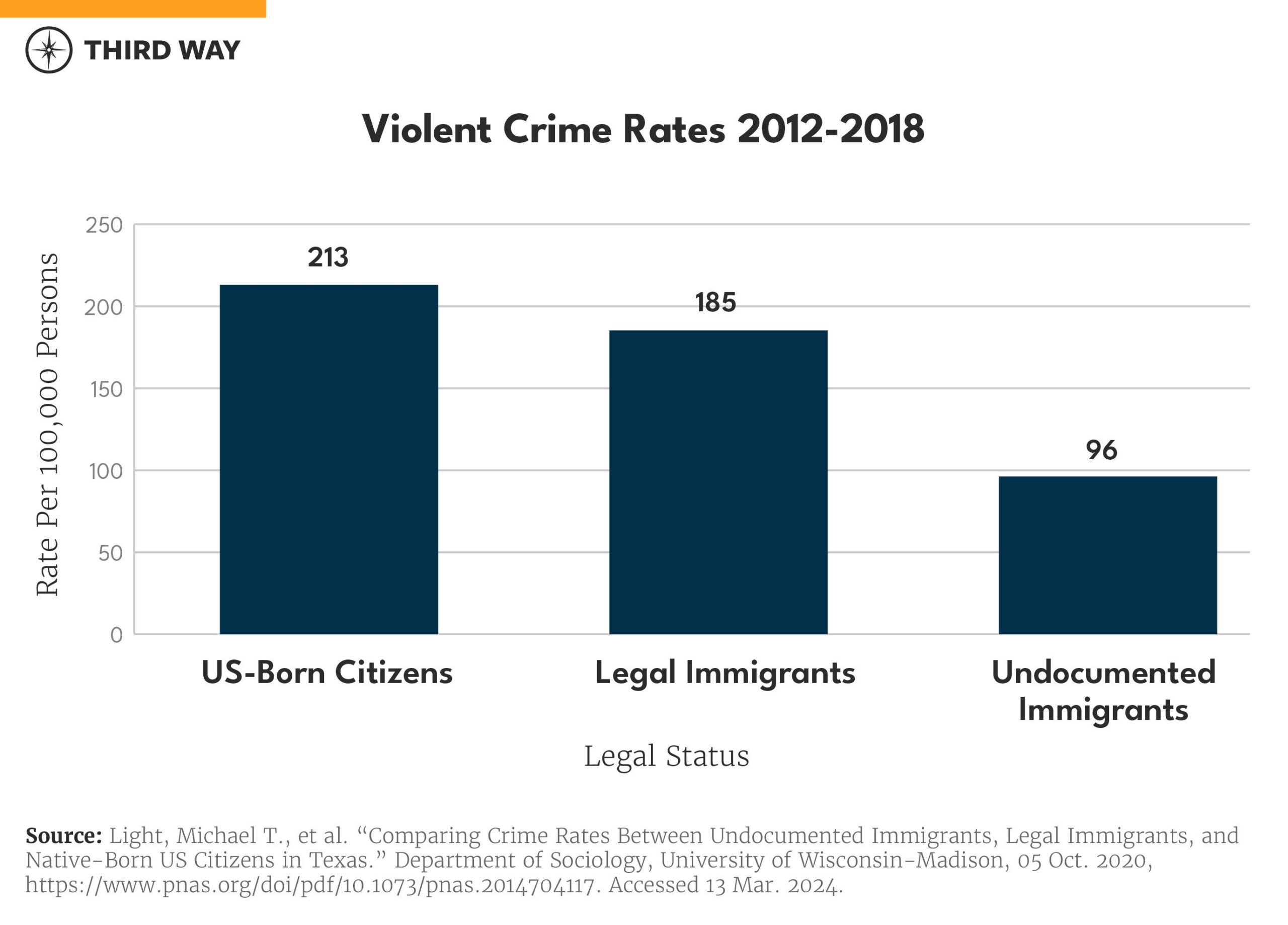
Amid ongoing public debate over immigration and public safety, the narrative of a so-called “migrant crime wave” has gained traction in some media outlets and political discourse. However, a recent thorough analysis by the Brennan Center for Justice challenges this perception, revealing that the data does not support claims of increased criminal activity linked to migrants.This article delves into the findings of the Brennan Center, exploring how misrepresentations and misinformation have fueled fears that fail to align with empirical evidence.
Migrant Crime Rates Examined What the Data Really Shows
Contrary to widespread perceptions, comprehensive analyses show that migrants do not commit crimes at higher rates than native-born populations. Multiple studies from the Brennan Center for Justice highlight that immigrant communities often have lower incarceration rates and engage less frequently in criminal activities than the general populace. This trend holds across a range of offenses, from property crimes to violent acts, challenging the myth of a “migrant crime wave” perpetuated by sensationalized media narratives.
To illustrate, here is a breakdown of incarceration rates per 100,000 people based on immigration status:
| Group | Incarceration Rate | Year |
|---|---|---|
| Immigrants (foreign-born) | 120 | 2022 |
| Native-born citizens | 450 | 2022 |
- Urban and suburban areas with high migrant populations do not demonstrate spikes in crime rates.
- Economic integration and community stability often correlate with reduced criminal behaviour.
- Policy focus on enforcement rather than integration may distort public understanding of safety risks.
Common Misconceptions Fueling the Migrant Crime Narrative
One of the most pervasive myths driving the association between migrants and crime is the assumption that higher immigrant populations directly correlate with increased criminal activity. Research consistently disproves this claim, showing that immigrants are less likely to commit crimes than native-born populations. This misconception is often fueled by selective media coverage that highlights isolated incidents, ignoring comprehensive data trends. In reality, several studies indicate that neighborhoods with higher immigrant concentrations tend to have lower crime rates, undermining the stereotype.
Compounding the issue are common but flawed narratives that:
- Ignore socioeconomic factors: Crime correlates more strongly with poverty, lack of opportunity, and systemic inequality rather than immigration status.
- Conflate legal status with criminality: The vast majority of undocumented migrants are law-abiding, and immigration offenses themselves are administrative, not criminal.
- Use anecdotal evidence: Singular events are extrapolated to portray an entire group unfairly, while ignoring broader statistical contexts.
| Statistic | Immigrants | Native-born |
|---|---|---|
| Incarceration Rate (per 100,000) | 450 | 700 |
| Likelihood of Arrest | Lower | Higher |
| Reported Crime Increase | None | Correlation with poverty |
Impact of Misinformation on Public Policy and Community Trust
Misinformation surrounding migrant crime has tangible consequences beyond mere public perception. It skews policymakers’ priorities, frequently enough leading to the allocation of resources away from effective community programs toward unnecessarily punitive measures. This misdirection undermines evidence-based policies that could more efficiently address real social issues. The resulting legislation, influenced by distorted narratives, risks marginalizing entire communities, fostering social division rather than cohesion.
Community trust also suffers significantly under the weight of falsehoods. Fear and suspicion catalyzed by misleading crime statistics erode the foundational bonds that hold diverse neighborhoods together. Local leaders and law enforcement agencies frequently enough face increased challenges in building partnerships with migrant communities,which are essential for addressing genuine public safety concerns. The cycle of misinformation and distrust also fuels stigma, making integration and mutual understanding more difficult to achieve.
| Impact | Consequences |
|---|---|
| Policy Misalignment | Shift towards punitive actions over preventive community support |
| Resource Drain | Funds diverted from effective social programs to unnecessary enforcement |
| Social Fragmentation | Increased fear and decreased interaction among neighbors |
| Distrust in Authorities | Hampers cooperation with law enforcement |
- Accurate data is critical to shaping fair policies.
- Community dialog can counteract deeply ingrained myths.
- Media accountability plays a key role in correcting false narratives.
Recommendations for Fact-Based Reporting and Policy Reform
Accurate data collection and responsible journalism are fundamental to dismantling false narratives surrounding migrant communities. Media outlets and policymakers must prioritize verified statistics from credible sources rather than relying on anecdotal evidence or sensationalist headlines. Key actions include:
- Implementing standardized crime reporting practices that clearly distinguish between migrant and non-migrant populations
- Engaging with self-reliant research institutions to validate data before publication
- Providing context that considers socioeconomic factors affecting criminal activity rather than linking crime causally to migration status
On the policy front,reform must focus on evidence-based approaches that address the underlying drivers of criminal behavior without stigmatizing migrant groups. Below is a concise overview of policy recommendations aimed at fostering public safety and social cohesion:
| Policy Area | Recommended Actions |
|---|---|
| Criminal Justice | Enhance training for law enforcement on cultural competency and implicit bias |
| Social Services | Expand access to affordable housing, education, and employment opportunities for migrants |
| Community Engagement | Support grassroots initiatives that promote dialogue and integration between migrants and native-born communities |
Future Outlook
In dismantling the persistent narrative of a ‘migrant crime wave,’ the Brennan Center for Justice underscores the critical importance of evidence-based discourse in public policy and media coverage. As the data consistently reveal, immigrants are not the threat they are often portrayed to be, but rather integral members of the communities they join. Moving forward, fostering informed and nuanced discussions about immigration is essential to countering misinformation and shaping policies grounded in fact, not fear.