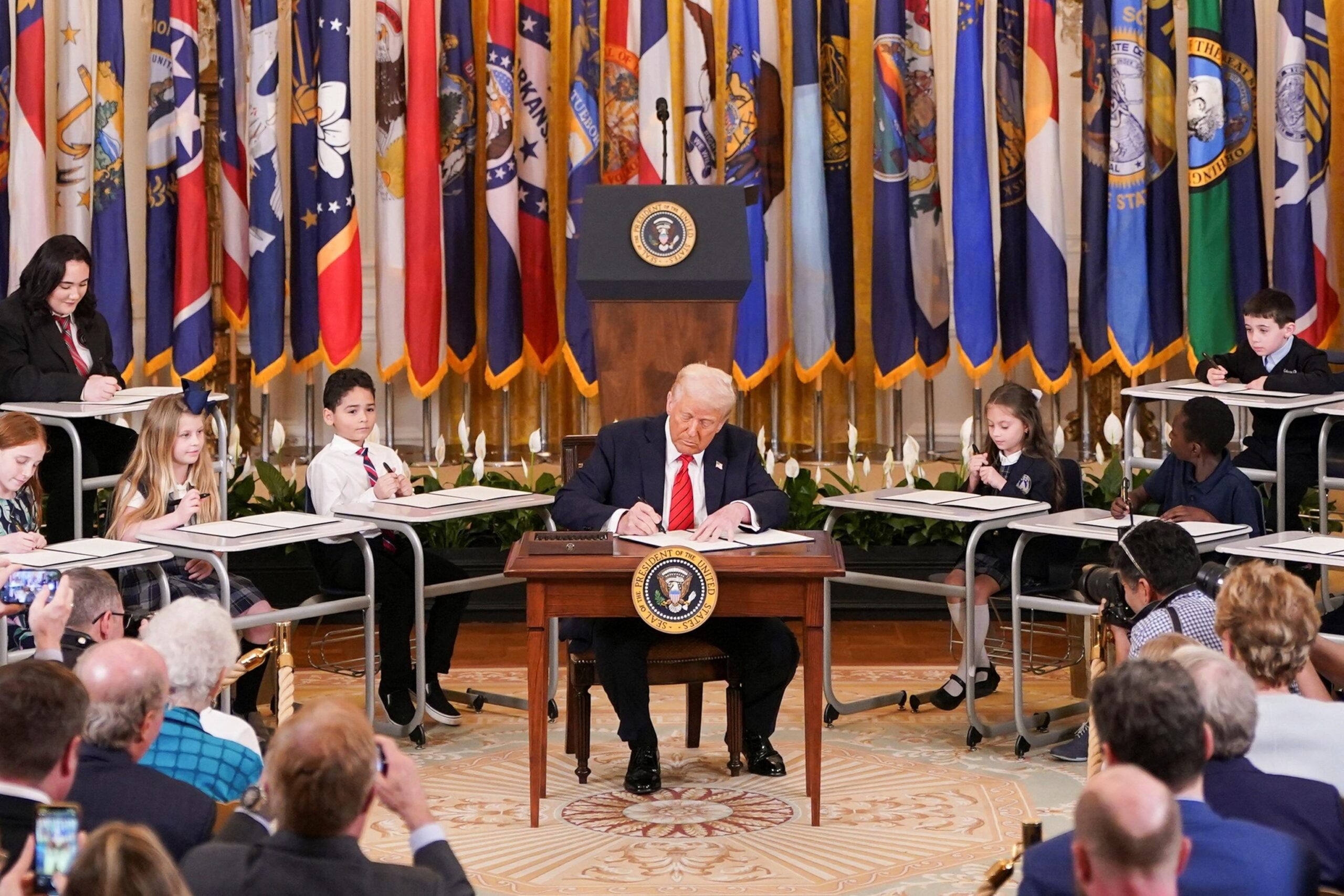
As debates over the future of federal education policy intensify, recent remarks by former President Donald Trump have reignited discussions on the possibility of dismantling the U.S. Department of Education.In a move that has sparked controversy and raised legal questions,Trump’s statements challenge the longstanding role of the department in shaping national education standards and funding. This article delves into the feasibility of abolishing the Department of Education, examining the political, legal, and practical implications of such a bold proposition, while highlighting perspectives from policymakers, education experts, and legal scholars.
Trump’s Legal Authority to Dismantle the Department of Education
Under the U.S. Constitution, the President does not possess unilateral authority to dissolve entire federal departments such as the Department of Education. Rather, Congress controls the establishment and appropriation of federal agencies, meaning dismantling a cabinet-level department requires legislative action.While the President can direct executive priorities and potentially reduce or redirect funding within legal limits, the formal abolition of any department necessitates passing new laws through both houses of Congress and securing the President’s approval. Historically, major reorganizations or eliminations of federal bodies have involved extensive congressional debate and legal scrutiny, underscoring the institutional checks on executive power.
Additionally,Trump’s administration could propose executive orders to modify how the Department operates or consolidate functions with other agencies,but these steps fall short of complete abolition. Legal experts highlight several key points:
- Statutory Basis: The Department of Education was established by Congress in 1979, codified in federal law.
- Congressional Oversight: Budgetary control remains a core lever for legislative influence over agency existence.
- Judicial Review: Courts may intervene if executive actions exceed statutory or constitutional authority.
| Authority | Role in Dismantling | Limitations |
|---|---|---|
| President | Propose changes,direct agency leadership | Cannot abolish departments alone |
| Congress | Pass laws to create or dismantle agencies | Must reach legislative consensus |
| Court System | Ensure actions comply with laws & constitution | Can invalidate unlawful orders |
Political Challenges and Congressional Resistance
The prospect of eliminating the Department of Education faces important hurdles within Congress, where bipartisan opposition remains steadfast. Lawmakers from both parties argue that complicating or dismantling a federal agency with a budget surpassing $70 billion could destabilize existing education infrastructure, resulting in unintended consequences for millions of students.In particular, congressional resistance is fueled by concerns about funding for public schools, student loan programs, and civil rights enforcement efforts, all of which are managed or heavily influenced by the department.
Key points contributing to legislative pushback include:
- Impact on State and Local Education — Many fear federal withdrawal could exacerbate disparities across school districts.
- Student Loan Oversight — Congress worries over shifting management of billions in federal student debt.
- Legal and Regulatory Framework — Congress is reluctant to abandon protections under Title IX and disability laws.
| Congressional Group | Stance on Abolishment | Key Concern |
|---|---|---|
| Democrats | Strongly Opposed | Protecting funding and civil rights protections |
| Republicans (Moderates) | Mixed | Balancing federal role with state autonomy |
| Republicans (Conservatives) | Supportive | Reducing federal spending and bureaucracy |
Impact on Federal Education Programs and Student Aid
Should the Department of Education be dismantled,the ripple effects on federal education programs would be profound and complex. Billions in funding currently flow through the department to support public schools, special education, and initiatives like Title I, which aids disadvantaged students.Without a centralized agency, states and local districts could face significant challenges in maintaining these programs’ scope and integrity. The distribution and oversight of federal grants—vital lifelines for infrastructure, technology upgrades, and teacher training—would need urgent restructuring or risk severe disruption.
Student aid, meanwhile, hinges heavily on the Department of Education’s administration. Here’s how the impact might break down:
- Pell Grants: Over 7 million low- and moderate-income students rely on these grants annually for tuition support.
- Federal Student Loans: The department manages billions in loans, with repayment and forgiveness programs intricately linked to its infrastructure.
- Work-Study Programs: Offering part-time jobs to millions of college students, these initiatives could lose a centralized funding source.
| Program | Annual Beneficiaries (Millions) | Approximate Funding (Billion $) |
|---|---|---|
| Pell Grants | 7.1 | 30 |
| Federal Student Loans | 11.3 | 100+ |
| Work-Study | 0.8 | 1 |
Recommendations for Stakeholders Navigating Potential Changes
Stakeholders should proactively maintain open dialog channels with both federal and state education authorities to stay informed about any legislative developments. Engaging in dialogue with policymakers, education advocates, and community leaders can provide critical insights and foster collaborative solutions.Additionally,organizations are encouraged to review their strategic plans to accommodate potential shifts in federal funding or regulatory oversight,ensuring continuity in educational services irrespective of changes at the Department of Education.
Key actions to consider include:
- Monitoring congressional sessions and public statements by administration officials.
- Participating in public forums and consultations related to education policy.
- Strengthening partnerships with local education agencies to buffer against federal uncertainty.
| Stakeholder | Recommended Focus | Potential Impact |
|---|---|---|
| School Districts | Financial planning and resource diversification | Mitigated funding fluctuations |
| Higher Education Institutions | Advocacy for federal research grants | Preserved research programs |
| Policy Makers | Crafting adaptable education legislation | Sustainable policy frameworks |
To Wrap It Up
In closing, while former President Donald Trump has repeatedly expressed his desire to abolish the Department of Education, the practical and legal hurdles to such a move remain significant. Ultimately, dismantling a federal agency of this magnitude would require not only presidential support but also congressional approval—a formidable challenge given the political landscape. As debates over the role of federal oversight in education continue, the future of the Department of Education will likely depend on the evolving priorities of lawmakers and the administration, rather than the ambitions of any single political figure.