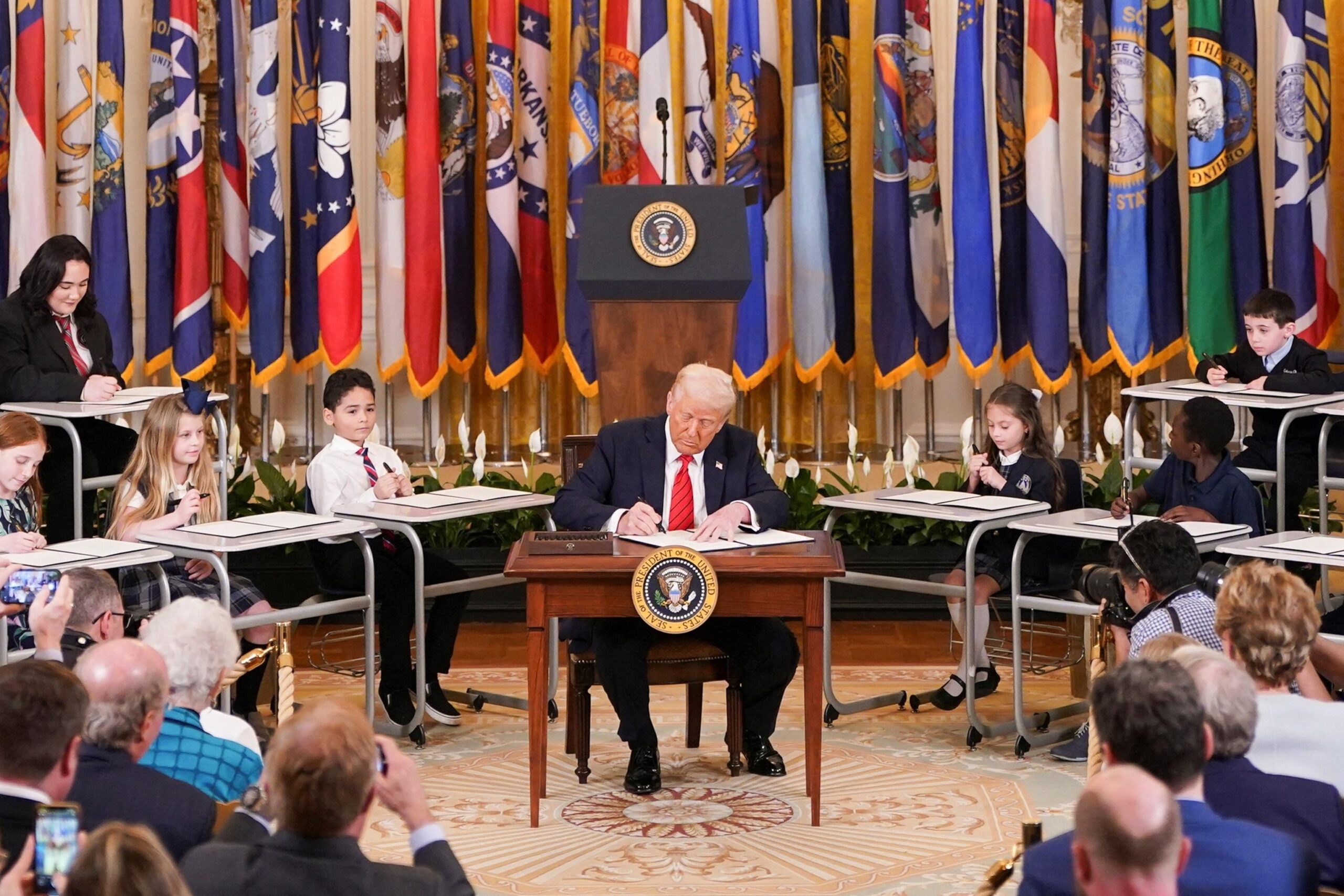
In a decisive move that has ignited widespread debate, former President Donald Trump signed an executive order aimed at dismantling the U.S. Department of Education “once and for all,” according to The New York Times. The order, unveiled amid ongoing disputes over federal involvement in education policy, signals a dramatic shift in the federal government’s role in shaping public schooling. Critics and supporters alike are weighing in on the implications of perhaps dismantling a cornerstone agency responsible for overseeing educational standards and funding nationwide. This article examines the details of the order, the administration’s rationale, and the varying responses from policymakers and education advocates.
Background and Motivations Behind the Executive Order Targeting the Education Department
President Trump’s latest executive order targeting the U.S. Department of Education is rooted in a longstanding conservative critique of federal involvement in public schooling. Advocates within the administration argue that education policy is best managed at local and state levels rather than through blanket federal oversight, which they claim stifles innovation and imposes needless regulations. The administration points to escalating education costs and what they consider bureaucratic inefficiencies as evidence that the department has outlived its usefulness.
Key motivations behind this directive include:
- Promotion of school choice: Empowering parents with more options such as charter schools and homeschooling alternatives.
- Reduction of federal reach: Shifting control to states to design curriculums tailored to their specific communities.
- Cutting taxpayer spending: Decreasing federal education budgets in hopes of reducing the national debt.
| Reason | Expected Outcome |
|---|---|
| Decentralization | More localized control over education |
| Budget Cuts | Reduction in federal spending on education |
| Policy Innovation | Adaptability for states to experiment with new education models |
Implications for Federal Education Policy and Funding Across the United States
The executive order signed by President Trump marks a significant shift in how federal education funds are allocated and monitored nationwide. States and school districts that have long relied on Department of Education support for program advancement, compliance enforcement, and innovation initiatives may now face increased uncertainty. Key programs—including Title I funding for disadvantaged students and federal grants for special education—will likely see dramatic restructuring or outright elimination, forcing localized decision-making to take precedence.
Potential impacts include:
- Greater autonomy for states,potentially leading to uneven education standards across the country
- Reduction in federal oversight affecting accountability for civil rights protections in schools
- Shifts in competitive grant funding,with less centralized distribution and monitoring
| Program | Current Funding Source | Projected Changes |
|---|---|---|
| Title I Grants | Federal | Decentralized to State Agencies |
| IDEA (Special Ed.) | Federal | Potential Cuts, Increased State Control |
| School Safety Initiatives | Federal | Uncertain, Possibly Eliminated |
Reactions from Educators, Lawmakers, and Advocacy Groups
Educators expressed deep concern over the order, warning it could unravel decades of progress in federal support for public education. Many teachers and administrators voiced fears about the loss of essential resources aimed at reducing educational inequity. “This action threatens to widen the gap between affluent and marginalized communities,” noted a leading education union representative. Advocacy groups also highlighted potential negative impacts on student services, citing an increased risk of diminished protections for vulnerable populations.
Lawmakers’ reactions were sharply divided, reflecting the political stakes involved. Several Democratic officials condemned the move as reckless and short-sighted, emphasizing the Department’s crucial role in enforcing civil rights laws and managing student aid programs. Conversely, some Republican legislators applauded the order, framing it as a necessary step toward reducing federal overreach. The table below outlines key perspectives:
| Stakeholder | Main Concern/Support | Quote |
|---|---|---|
| Educators | Loss of vital funding and protections | “A devastating blow to public education.” |
| Democratic Lawmakers | Threat to civil rights enforcement | “Endangers students’ legal protections.” |
| Republican Lawmakers | Reducing federal bureaucracy | “A bold move toward state autonomy.” |
| Advocacy Groups | Impact on marginalized students | “An assault on equitable education.” |
Potential Legal Challenges and the Future of the Education Department
Legal experts anticipate a barrage of lawsuits challenging the executive order, emphasizing the constitutional authority and enduring role of the Department of Education. Opponents argue that such an abrupt elimination could disrupt federal funding streams, jeopardize student aid programs, and dismantle essential oversight mechanisms that have been in place since the department’s inception in 1979. Several civil rights groups and education advocates have already signaled intent to file injunctions, citing concerns over potential violations of the Administrative Procedure Act and suspected overreach of executive power.
Key Legal Challenges Include:
- Questions over the executive branch’s power to unilaterally dissolve a federal agency.
- Potential breaches in statutory obligations that mandate federal education support.
- Implications for students dependent on federally backed financial aid.
- Concerns about the continuity of civil rights enforcement within educational institutions.
| Aspect | Status |
|---|---|
| Federal Student Loans | At risk of disruption |
| Title IX Enforcement | Uncertain future |
| State Education Oversight | Potentially increased |
| Legal Battle Duration | Months to years |
Looking ahead,the future of the Education Department rests precariously on a complex interplay of judicial review and legislative response. While the executive order places immediate pressure on the department’s structure, Congress may intervene either to codify or repeal the move through new legislation. Furthermore, discussions among stakeholders suggest a possible reimagining of how federal education policy is administered — with some calling for decentralization, others advocating for a streamlined agency focusing on core missions.
Concluding Remarks
As the ramifications of President Trump’s executive order to dismantle the Department of Education unfold, educators, policymakers, and stakeholders nationwide are closely monitoring the potential shifts in federal education oversight and funding. While proponents argue the move advances decentralization and local control,critics warn of the uncertainties it may introduce to a system already grappling with myriad challenges. The coming months will be critical in assessing how this bold initiative shapes the future of American education.