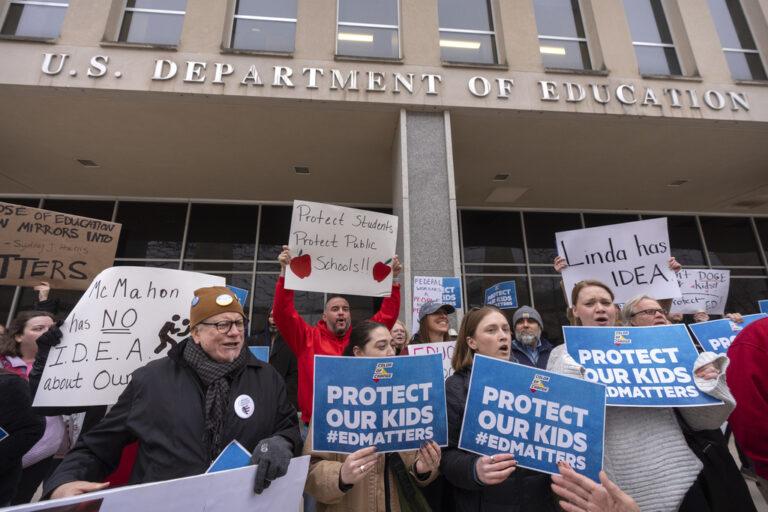
Debate Intensifies Over Former President Trump’s Plan to Eliminate the U.S. Department of Education
Former President Donald Trump’s recent initiative to abolish the U.S. Department of Education has ignited a nationwide discussion about the future of federal involvement in education. Advocates for the proposal emphasize empowering state and local authorities with greater control over educational policies, arguing that decentralization could foster innovation and reduce bureaucratic inefficiencies. However, opponents caution that dismantling the federal agency responsible for enforcing student protections risks eroding essential safeguards, especially for marginalized and vulnerable student groups.
Critics highlight several potential consequences of this plan, including:
- Diminished enforcement of civil rights laws within educational institutions
- Possible reduction in funding for schools in economically disadvantaged areas
- Weakened support and accommodations for students with disabilities
- Loss of consistent accountability measures across states
While decentralization may encourage localized solutions, experts warn it could also exacerbate disparities in educational quality nationwide. The table below contrasts current federal responsibilities with the risks posed by the department’s closure:
| Function | Current Role of Department of Education | Potential Outcome if Department is Eliminated |
|---|---|---|
| Civil Rights Enforcement | Active federal oversight ensuring compliance | Delegated to states with uneven enforcement standards |
| Student Loan Administration | Managed federally with borrower protections | Shifted to private entities, increasing risk of predatory practices |
| Support for Special Education | Federal funding and policy guidance | Uncertain funding and inconsistent service quality |
| Accountability and Data Collection | Standardized nationwide metrics and reporting | Fragmented data systems, reducing clarity |
Consequences for Student Rights and Protections
The proposal to dismantle the Department of Education raises significant concerns about the future enforcement of student rights and protections. Central to these worries is the potential weakening of federal oversight in areas such as anti-discrimination enforcement, privacy safeguards, and equitable resource allocation.Without a unified federal authority, students—especially those from historically underserved communities—may face diminished protections that have been critical in promoting fairness and inclusion in education.
Specific areas vulnerable to change include:
- Anti-discrimination enforcement: The consistent application of Title IX protections could falter, increasing risks of harassment and inequality based on gender, race, or disability.
- Disability accommodations: Federal mandates ensuring access to necessary educational supports may become fragmented or unenforced, adversely affecting students with special needs.
- Funding equity: The distribution of federal funds to schools and universities might shift, perhaps widening the gap between affluent and under-resourced districts.
| Student Protection | Current Department Role | Risk if Department is Closed |
|---|---|---|
| Discrimination Enforcement | Consistent federal oversight | Inconsistent enforcement, increased vulnerability |
| Student Privacy (FERPA) | Protection of educational records | Fragmented privacy protections |
| Special Education Funding | Mandated accountability and funding | Widening disparities in service quality |
Expert Analysis: Risks of Reduced Federal Oversight
Education policy specialists have voiced strong concerns about the ramifications of scaling back or eliminating the Department of Education. They emphasize that without a central regulatory body, students—particularly those from low-income and minority backgrounds—may lose critical protections against exploitative lending, discrimination, and inadequate educational programs. The absence of federal coordination could lead to a patchwork of state-level policies, undermining efforts to maintain consistent educational standards and equity nationwide.
Experts identify several key risks:
- Weakened enforcement of civil rights laws protecting students
- Reduced oversight of for-profit educational institutions and predatory financial practices
- Potential rollback or elimination of student debt relief and loan forgiveness programs
- Loss of centralized data collection and research critical for informed policymaking
| Impact | Most Affected Student Groups |
|---|---|
| Diminished consumer protections | Low-income and minority students |
| Reduced accountability for educational institutions | Students attending for-profit colleges |
| Decreased availability of federal financial aid | First-generation college students |
| Limited support for special education | Students with disabilities |
Strategies to Protect Student Interests Amid Departmental Changes
In light of the proposed elimination of the Department of Education, it is indeed crucial for lawmakers and education leaders to implement safeguards that preserve student rights and ensure uninterrupted access to educational resources. Maintaining the continuity of federal student aid programs is essential, necessitating clear transitional plans to avoid funding gaps. Additionally, establishing enhanced oversight mechanisms through choice agencies can definitely help uphold compliance with educational standards and protect borrowers and institutions.
Recommended actions to mitigate negative effects include:
- Formation of a specialized federal task force: Charged with managing education-related responsibilities during and after the department’s closure,with a focus on protecting Pell Grants and student loan programs.
- Strengthening data security measures: Implementing rigorous protocols to safeguard sensitive student facts amid administrative transitions.
- Legislative protections: Ensuring continued enforcement of critical laws such as Title IX and the Individuals with Disabilities Education Act (IDEA).
| Focus Area | Proposed Measures |
|---|---|
| Student Financial Aid | Ensure seamless access and streamline application processes |
| Consumer Protection | Designate a new regulatory body with enforcement authority |
| Data Privacy and Security | Adopt federal standards for protecting student data |
| Legal Compliance | Maintain enforcement of civil rights and disability legislation |
Looking Ahead: Navigating the Future of Federal Education Oversight
As the debate over the future of the U.S. Department of Education continues, stakeholders across the education spectrum remain vigilant.The potential dismantling of this federal agency raises profound questions about how best to balance state autonomy with the need for consistent protections and equitable access to quality education. The coming months will be pivotal in shaping policies that could redefine the nation’s educational landscape, with significant implications for students, educators, and communities nationwide.